AI Customer Service and AI CRM System for Modern Businesses
Learn about AI customer service and AI CRM systems to improve customer experience, automation, operational efficiency, and business sales.
AI Customer Service and AI CRM System in AI for Modern Business
In the era of digital transformation, customers no longer just expect fast service. They desire personalized experiences, instant responses, omnichannel communication, and solutions relevant to their needs. This is why the implementation of AI customer service and AI CRM systems has become a crucial foundation in modern business strategy.
Artificial Intelligence (AI) is no longer just an additional technology. AI has evolved into a primary engine that helps companies improve operational efficiency, accelerate customer service, increase customer retention, and optimize sales automatically. Many global companies are integrating AI into customer support, sales pipelines, marketing automation, and customer behavior analysis.
For businesses in Indonesia, implementing AI customer service is no longer a question of “whether it's necessary”, but “how quickly the business can adapt”. Companies that are slow to adopt AI risk losing customers due to being outpaced in speed, personalization, and service experience.
Through this article, we will discuss in depth:
What is AI customer service
What is an AI CRM system
How AI works in modern business
Benefits of AI for customer experience
AI integration with CRM
Case studies of AI implementation
Challenges and risks of AI
Proper AI implementation strategy
The future of AI customer service in Indonesia
What Is AI Customer Service?
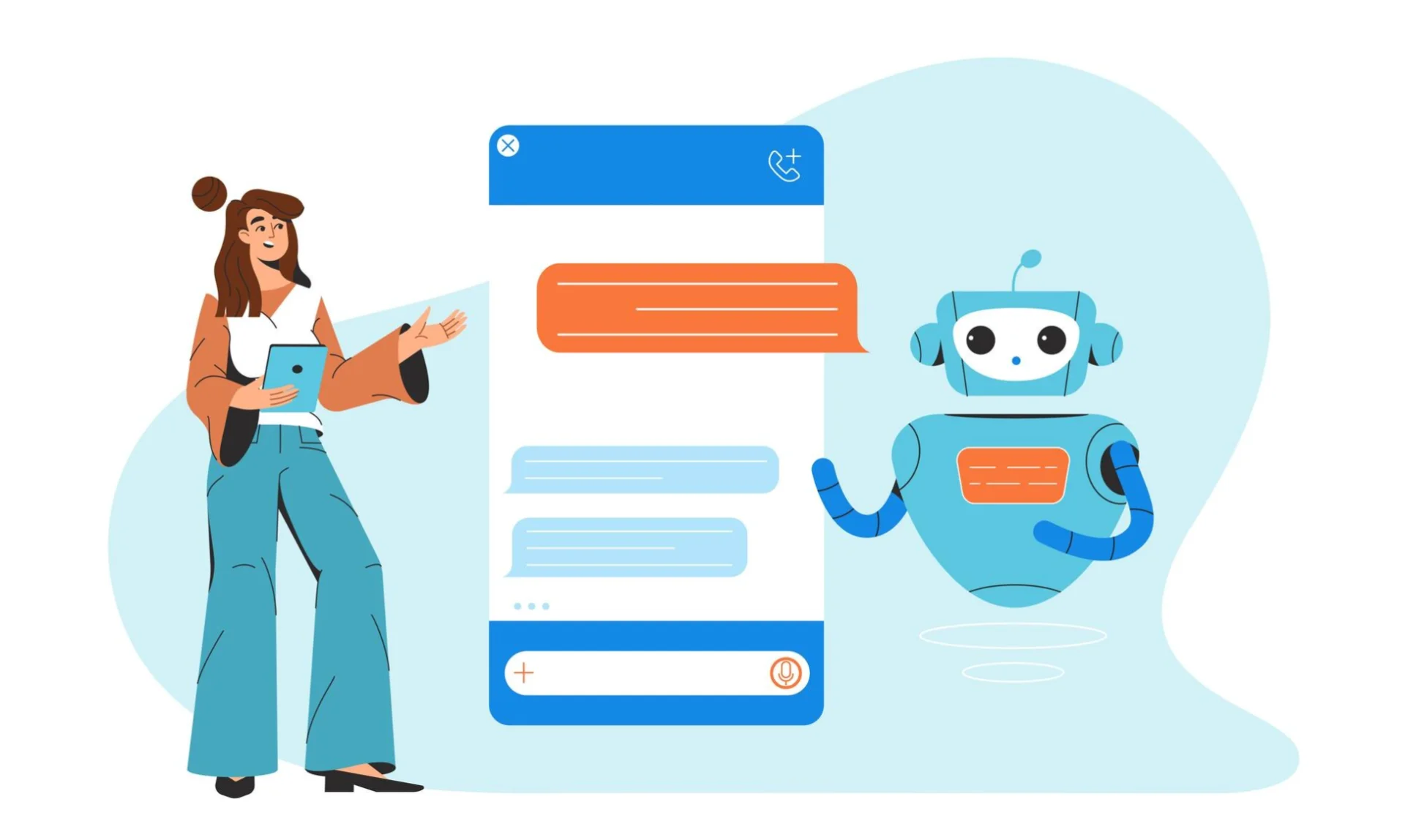
AI customer service is the use of artificial intelligence technology to automate, assist, and enhance customer service.
This technology can include:
AI chatbots
AI voice assistants
AI ticket routing
AI sentiment analysis
AI recommendation engines
AI email automation
AI predictive support
AI conversational support
Unlike older chatbots that only answered based on simple keywords, modern AI uses Natural Language Processing (NLP) and machine learning to understand the context of customer conversations more naturally.
Modern AI customer service is capable of:
Understanding complex questions
Remembering conversation context
Providing personalized recommendations
Routing tickets to the appropriate department
Providing real-time responses
Learning from interaction history
According to IBM, organizations mature in the use of AI customer service have higher customer satisfaction rates than businesses that have not yet adopted AI.
Why Is AI Customer Service So Important?
1. Customer Expectations Are Rising
Modern customers want:
Instant responses
24-hour service
Multichannel support
Consistent experience
Fast problem resolution
Without AI, customer service teams are often overwhelmed by spikes in tickets and customer inquiries.
AI allows businesses to provide fast service without having to significantly increase staff numbers.
2. Customer Interaction Volume Continues to Increase
Businesses currently receive inquiries from:
WhatsApp
Instagram
Email
Website
Marketplaces
Live chat
Phone
Managing all channels manually is very difficult. AI helps consolidate all communication into one integrated system.
According to various latest CRM trends, conversational AI and omnichannel support are key focuses of modern CRM systems.
3. Operational Efficiency
AI customer service can reduce the workload of repetitive tasks such as:
FAQs
Order tracking
Password resets
Bookings
Payment status
Meeting scheduling
This allows human teams to focus on complex cases that require empathy and strategic decision-making.
What Is an AI CRM System?
An AI CRM system is Customer Relationship Management integrated with AI technology to help businesses understand, manage, and optimize customer relationships automatically.
Traditional CRMs store customer data. But AI CRM systems go much further.
AI CRM can:
Predict customer behavior
Identify sales opportunities
Provide follow-up recommendations
Assess lead quality
Detect customer churn
Assist with marketing personalization
Automate sales pipelines
AI CRM transforms customer data into actionable business insights.
Traditional CRM vs. AI CRM Differences
Aspect | Traditional CRM | AI CRM System |
Data Input | Manual | Automated |
Customer Analysis | Basic | Predictive |
Customer Support | Human only | Human + AI |
Lead Scoring | Manual | AI-driven |
Automation | Limited | Advanced automation |
Personalization | Low | High |
Sales Forecasting | Inaccurate | Data-driven |
How AI Customer Service Works
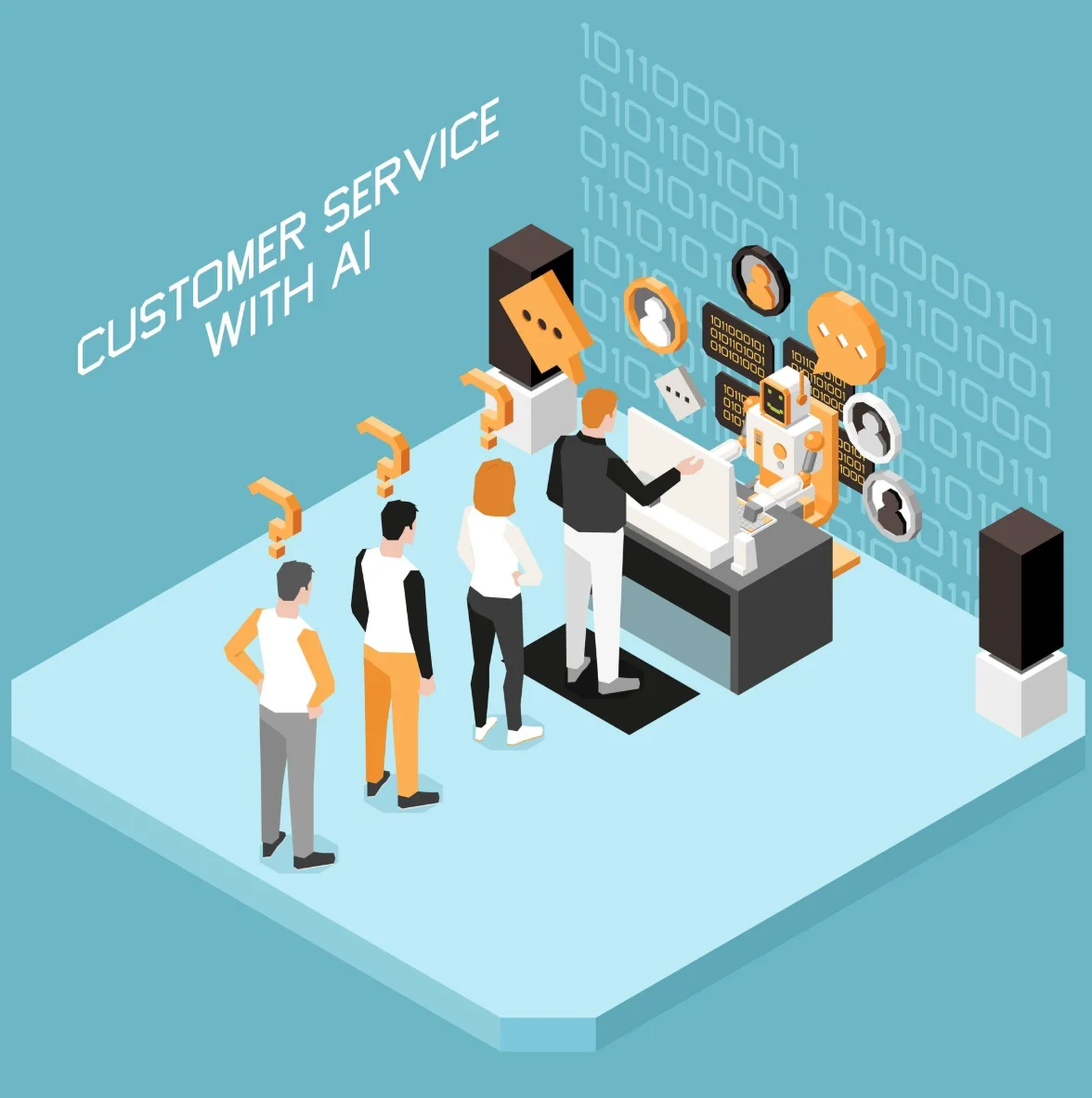
Natural Language Processing (NLP)
NLP enables AI to understand human language.
AI can recognize:
The intent of a question
Customer emotions
Conversation context
Ambiguous words
Informal language
Example:
A customer writes:
“My order still hasn't arrived since yesterday.”
AI can understand that:
This is a shipping complaint
The urgency level is high
It requires order tracking
Machine Learning
AI learns from previous conversation history.
The more interactions:
The more accurate the responses
The faster the resolution
The better the recommendations
Sentiment Analysis
AI can detect customer emotions:
Anger
Frustration
Happiness
Confusion
The system can automatically:
Prioritize angry customers
Escalate to a human agent
Provide different responses based on emotion
Predictive Analytics
AI CRM can predict:
Customer churn
Potential for purchase
Products likely to be bought
Best follow-up time
Customer lifetime value
Benefits of AI Customer Service for Business

1. Faster Responses
AI can respond in seconds.
This improves:
Customer satisfaction
Conversion rates
Customer retention
2. 24/7 Service
AI does not require working hours.
Customers can still:
Ask questions
Create tickets
Get help
Make transactions
even outside operational hours.
3. Reduced Operational Costs
AI can handle thousands of conversations simultaneously.
Businesses can:
Reduce support costs
Decrease team overload
Increase efficiency
4. Improved Customer Experience
AI enables experiences that are:
Fast
Personalized
Consistent
Omnichannel
According to the latest customer service trends, AI personalization is a key factor in increasing customer loyalty.
5. Increased Sales
AI CRM helps sales teams to:
Prioritize leads
Analyze closing opportunities
Determine follow-up strategies
AI can identify customers with the highest potential to buy.
AI Customer Service in Omnichannel Business
Modern businesses cannot rely solely on one communication channel.
Modern AI customer service can integrate:
WhatsApp Business
Instagram DM
Facebook Messenger
Email
Website Live Chat
Phone
Marketplace Chat
AI maintains consistent conversation context across all platforms.
For example:
Customer chats on the website
Continues on WhatsApp
Calls the call center
AI still understands previous interaction history.
Zendesk has even developed cross-platform AI agents like ChatGPT, voice assistants, and messaging apps to maintain continuity in customer interaction.
Integrating AI Customer Service with CRM
This is the most crucial part of modern digital transformation.
When AI customer service is connected with CRM:
All customer history is automatically saved
Customer profiles are always updated
Sales can view support history
Marketing can create personalized campaigns
Customer service understands customer needs better
This integration creates a seamless customer journey.
Case Studies of AI Customer Service Implementation
Case Study 1 E-Commerce
Problem:
An e-commerce business receives thousands of chats daily regarding:
Order status
Refunds
Shipping complaints
Promotions
The support team was overwhelmed.
Solution:
Implementation of an AI chatbot integrated with CRM.
Results:
70% of FAQs automatically resolved
Response time significantly reduced
Customer satisfaction increased
Support team focused on complex cases
Case Study 2 SaaS Company
Problem:
Sales team found it difficult to manage thousands of leads.
Solution:
Used AI CRM for:
Lead scoring
Automated follow-up
Predictive conversion analysis
Results:
Conversion rate increased
Sales pipeline more organized
Faster follow-ups
Case Study 3 Clinics and Healthcare
Problem:
Patients found it difficult to book appointments and ask questions outside working hours.
Solution:
AI customer service:
Automated booking
Appointment reminders
General health FAQs
Patient follow-ups
Results:
Reduced no-shows
Increased patient satisfaction
More efficient administration
Challenges of AI Customer Service Implementation
1. Unstructured Data
AI requires organized data.
Many businesses have:
Distributed data
Inconsistent CRMs
Incomplete customer history
Therefore, AI implementation must begin with good data management.
2. Integration with Legacy Systems
Legacy systems are often difficult to integrate.
Requires:
API integration
Middleware
Data migration
Workflow redesign
3. Lack of AI Strategy
Many businesses just follow trends.
However, AI must have:
Clear objectives
KPIs
Workflows
Governance
4. Data Security Risks
AI manages sensitive customer data.
Therefore, businesses must consider:
Data encryption
Compliance
Access control
Audit trails
5. AI Cannot Fully Replace Humans
AI is highly effective for:
Automation
FAQs
Data analysis
However, complex cases still require human intervention.
A hybrid AI + human support model is currently the best approach.
Key Features in Modern AI CRM Systems
AI Lead Scoring
Automatically assesses the quality of prospects.
Sales Forecasting
Predicts sales based on historical data.
Automated Workflow
Automates:
Emails
Reminders
Follow-ups
Assignments
Customer Segmentation
Groups customers based on:
Behavior
Demographics
Transactions
Activity
AI Recommendation
Provides recommendations for:
Products
Campaigns
Upselling
Cross-selling
The Future of AI Customer Service
1. Hyper Personalization
AI will provide highly personalized experiences.
Every customer receives:
Different offers
Different responses
Different journeys
2. AI Voice Agent
Voice AI is becoming more natural.
AI can:
Answer phone calls
Understand emotions
Speak multilingual
3. Predictive Customer Support
AI will detect problems before customers complain.
Example:
The system detects a shipping delay
AI automatically contacts the customer
4. Agentic AI
AI does not just answer questions.
AI is increasingly capable of:
Making decisions
Executing workflows
Completing complex tasks
Gartner names agentic AI as one of the major trends in modern customer service.
Effective AI Customer Service Implementation Strategy
Start with Business Problems
Don't start with technology.
Start with:
Customer service issues
Operational bottlenecks
Customer satisfaction levels
Integrate with CRM
AI without CRM is just a basic chatbot.
CRM enables:
Context awareness
Data centralization
Customer journey mapping
Gradual Automation
Start with:
FAQs
Ticket routing
Automated reminders
Then progress to:
Predictive AI
Recommendation engines
Advanced analytics
Retain the Human Touch
The best AI is AI that supports humans, not completely replaces them.
Why Businesses in Indonesia Must Start Adopting AI?
Business competition is getting tougher.
Indonesian customers are now accustomed to:
Instant responses
Chat automation
Personalized service
Businesses that do not adapt will be left behind.
AI customer service and AI CRM help businesses to be:
More scalable
More efficient
Faster growing
Closer to customers
Proper AI implementation can increase:
Revenue
Operational efficiency
Customer loyalty
Brand reputation
AI Customer Service and AI CRM Solutions for Your Business
Every business has different needs:
E-commerce
Education
Healthcare
Manufacturing
Retail
SaaS
Hospitality
Therefore, AI implementation cannot use a generic approach.
A system is needed that is:
Customizable
Integrated
Secure
Scalable
Easy for internal teams to use
A team of developers and digital consultants who understand business workflows is essential in building effective AI customer service.
For businesses looking to build AI customer service systems, AI-based CRMs, workflow automation, and omnichannel integration professionally, you can explore enterprise digital solutions through BMS Services, which provides modern technology and automation-based business system development.
Conclusion
AI customer service and AI CRM systems have become essential parts of modern business transformation. This technology helps companies improve efficiency, accelerate service, reduce operational costs, and create a much better customer experience.
In an increasingly competitive digital landscape, companies that can integrate AI with CRM and business workflows will have a significant advantage in retaining customers and driving business growth.
AI is no longer a future technology. AI is a present business necessity.
Businesses that adapt earlier will have a greater opportunity to win the market, build customer loyalty, and create scalable operational systems for the long term.