CRM System Services for Business | BMS Services
Need a custom CRM system? BMS Services helps automate your sales, customer management, and business operational efficiency.
CRM System Services for Modern Businesses
In today's digital era, customer relationships are one of the most important assets for business growth. Many companies are starting to realize that manual record-keeping using spreadsheets or personal chats is no longer effective for managing customer data, sales, follow-ups, and after-sales service.
That's why the need for CRM system services is increasing. CRM, or Customer Relationship Management, is a system that helps companies manage all customer interactions more structured, efficiently, and automatically.
Through the proper use of CRM, businesses can improve service quality, accelerate sales processes, maintain customer loyalty, and make decisions based on accurate data.
BMS Services is here as a professional CRM system service provider that helps companies build CRM systems tailored to business needs, whether for MSMEs, startups, service companies, distributors, or large-scale enterprises.
What is a CRM System?
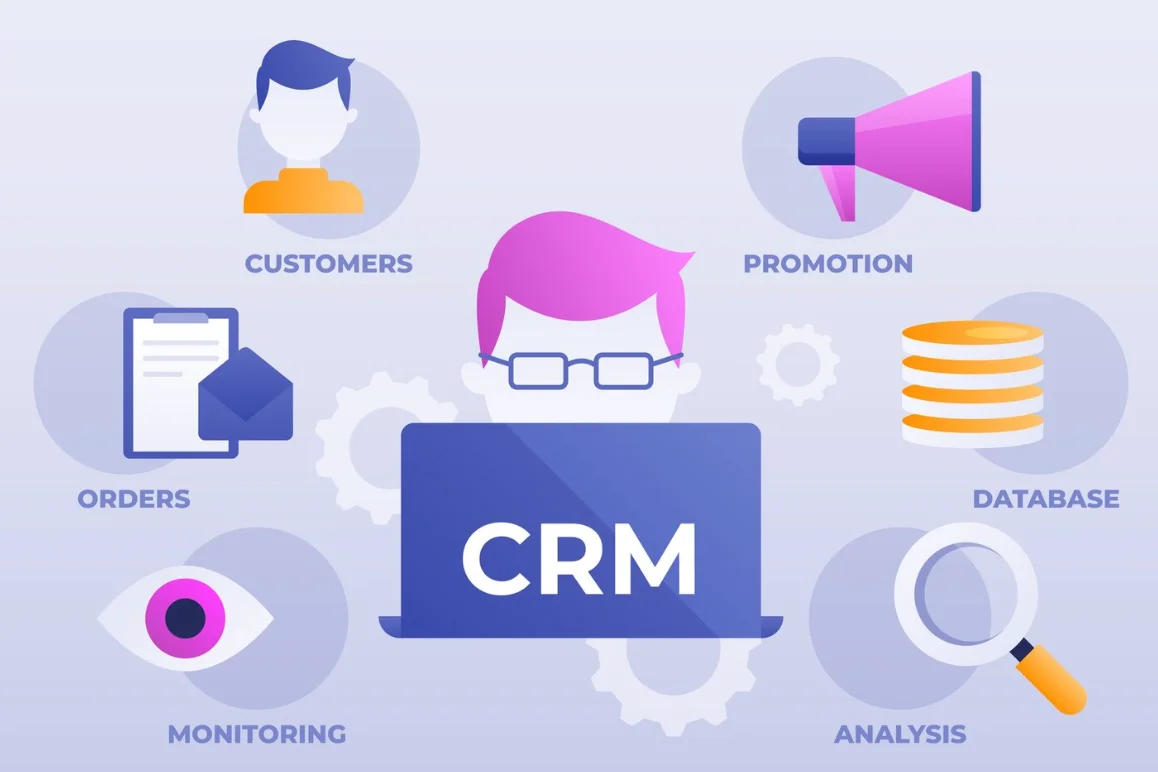
A CRM system is a platform used to store, manage, and analyze all customer data in one integrated place.
This system helps sales, marketing, customer service, and management teams work more effectively with organized customer data.
CRM not only functions as a customer database but also as the operational hub for business-customer relationships.
Some key functions of a CRM system include:
Storing customer data
Monitoring sales activities
Automated follow-ups
Sales pipeline
Customer support management
Sales performance analysis
Reminders and task management
WhatsApp, email, and website integration
Real-time business report dashboard
With CRM, companies can track the customer journey from first contact to becoming a loyal customer.
Why Do Businesses Need CRM System Services?
Many businesses experience operational problems because customer data is scattered in various places. Some store data in Excel, WhatsApp, Google Sheets, and even manual notes.
As a result:
Data is easily lost
Follow-ups are often delayed
Sales are difficult to monitor
Customers are not well served
Work processes become inefficient
It is difficult to create accurate reports
Through CRM system services, all these processes can be automated and centralized into one integrated system.
Benefits of a CRM System for Businesses
1. Increased Sales
CRM helps sales teams manage prospects better. The status of every potential customer can be monitored, increasing closing opportunities.
Sales can also find out:
Customers who need to be followed up with
Customer communication history
Products of interest
Sales stages
With an organized system, the sales process becomes faster and measurable.
2. More Organized Customer Data
All customer information is stored in one dashboard, making it easy to access anytime.
Starting from:
Customer name
Contact number
Transaction history
Chat history
Invoice
Follow-up activities
This helps companies provide more personalized service.
3. Workflow Automation
CRM can reduce time-consuming manual tasks.
Automation examples:
Follow-up reminders
Automated emails
Sales team notifications
Automated lead distribution
Customer status updates
Automated daily reports
Automation helps teams focus on more productive activities.
4. Easier Team Monitoring
Business owners can monitor team performance in real-time.
For example:
Number of incoming leads
Number of closings
Sales activities
Conversion rate
Outstanding follow-ups
All data can be viewed through the CRM dashboard.
5. Increasing Customer Loyalty
Customers who are served quickly and professionally tend to be more loyal.
CRM helps businesses:
Provide faster responses
Store customer preferences
Send personalized promotions
Maintain long-term communication
Customer relationships improve, leading to increased repeat orders.
Types of CRM Systems
CRM Sales Management
Used to help sales teams manage sales pipelines and customer follow-ups.
Common features:
Lead management
Sales pipeline
Follow-up reminders
Activity tracking
CRM Customer Service
Functions to improve the quality of customer service.
Features:
Ticketing system
Live chat
Complaint monitoring
Customer history
CRM Marketing Automation
Used for automated marketing activities.
Features:
Email marketing
WhatsApp blast
Campaign tracking
Customer segmentation
Custom CRM According to Needs
Every business has different needs. That's why many companies choose custom CRM so that features truly align with their business workflow.
BMS Services provides flexible and scalable custom CRM development tailored to company needs.
CRM System Implementation Case Study
Case Study 1: Property Company
A property company faced issues managing leads from digital advertising.
Problems encountered:
Leads were often contacted late
Significant customer data loss
Sales were not monitored
Low conversion rate
Solution
BMS Services created a custom CRM system with features:
Automated lead distribution
Follow-up reminders
Sales monitoring dashboard
WhatsApp integration
Real-time sales reports
Results After Implementation
Within 4 months:
Response time reduced by up to 70%
Closing increased by 35%
Leads were better organized
Sales team became more disciplined
Case Study 2: Health Clinic
A clinic struggled to manage patient data and consultation schedules.
Solution
CRM was developed with features:
Patient database
Automated appointment reminders
Consultation history
Patient follow-up system
Results
More organized schedules
Reduction in missed appointments
Improved patient service
Admin work became more efficient
Key Features in a CRM System
Realtime Dashboard
Displays live business data such as:
Sales
Leads
Team activity
Marketing performance
WhatsApp Integration
Modern CRMs can connect with WhatsApp for:
Automated follow-ups
Customer notifications
Sales chat monitoring
Pipeline Management
Pipelines help companies monitor customer sales stages.
Examples:
New lead
Contacted
Negotiation
Closing
Repeat order
Tasks and Reminders
CRM ensures no customer follow-up is missed.
Reporting and Analytics
Business data can be analyzed to aid decision-making.
Why Choose BMS Services for CRM System Solutions?
1. Custom CRM tailored to Business Workflow
Every company has different business processes. BMS Services builds systems that meet your operational needs.
2. Experienced Team
Supported by experienced developers and system analysts specializing in business software development.
3. Complete Integration
CRM can be integrated with:
Website
WhatsApp API
Email
Payment gateway
ERP
Company's internal systems
4. User-Friendly Interface
CRM is designed to be easy for all team members to use, without a complex learning curve.
5. Support and Maintenance
BMS Services provides technical support and maintenance to keep the system running optimally.
Who Benefits from a CRM System?
CRM is suitable for various types of businesses, such as:
Property companies
Clinics and hospitals
Schools and educational institutions
Distributors
Retail
Digital marketing agencies
Service companies
Startups
Manufacturing companies
Business Challenges Without CRM
Without CRM, companies typically experience:
Disorganized customer data
Difficulty tracking leads
Inconsistent follow-ups
Unmeasurable sales
High customer churn
Slow service
In the long run, this can hinder business growth.
CRM System and Digital Transformation
CRM is a crucial part of a company's digital transformation.
With a digital system:
More efficient operations
Data-driven decision making
Increased productivity
Improved customer service
More scalable business
Companies that quickly adapt to technology have a greater chance of thriving in the modern competitive era.
Tips for Choosing CRM System Services
Choose a Vendor Who Understands Your Business
CRM is not just about software, but a business solution. Ensure the vendor understands your company's operational needs.
Ensure the System is Scalable
Choose a scalable CRM that can grow with your business.
Pay Attention to Data Security
Customer data is a vital company asset. The CRM system must have strong security.
User-Friendly
A system that is too complex will hinder team productivity.
Boost Business Efficiency with Professional CRM
In today's increasingly competitive business environment, effective customer management is key to company growth. CRM helps businesses work faster, more efficiently, and with better measurability.
With the right system support, companies can improve service quality and increase sales opportunities.
If you are looking for professional CRM system services for your business, BMS Services is ready to assist you from consultation and planning to system development tailored to your company's needs.
Effective CRM System Implementation Strategy for Businesses
Many companies fail to maximize CRM usage not because the system is poor, but because its implementation is not well-planned. CRM is not just an additional software; it's a crucial foundation in modern customer relationship management and business operations.
For CRM to deliver optimal results, companies need to understand the proper implementation process, from needs analysis to team training.
1. Business Workflow Analysis
Before a CRM system is built, companies need to map out their internal workflows.
Important questions include:
How are leads acquired?
Who is responsible for follow-ups?
What is the sales approval process?
What are the main obstacles for the sales and customer service teams?
How are reports currently generated?
Through workflow analysis, a CRM system can be developed to be more relevant and tailored to the company's operational needs.
2. Defining CRM Usage Goals
Each business has different goals for CRM implementation.
Some common goals include:
Increasing conversion rates
Speeding up customer response
Simplifying sales monitoring
Reducing manual work
Increasing customer loyalty
Integrating all customer data
With clear objectives, companies can determine the CRM features truly needed.
3. Customer Data Migration and Structuring
One of the biggest challenges in CRM implementation is the data migration process.
Many companies have data that is:
Disorganized
Duplicated
Incomplete
Spread across various platforms
Therefore, the data cleaning process is crucial before the system is put into use.
A good CRM should be able to:
Segment customers
Store communication history
Prevent duplicate data
Facilitate data retrieval
4. Internal Team Training
Technology will only be effective if the team can use it well.
Therefore, BMS Services also assists companies with:
CRM usage training
Implementation guidance
Adaptation to new workflows
System usage monitoring
Proper training helps the transition process run more smoothly.
CRM Integration with Other Business Systems
Modern CRM does not stand alone. The system can be integrated with various business tools to make operations more efficient.
Website Integration
Leads from website forms can automatically flow directly into CRM.
Benefits:
No manual input required
Leads are followed up faster
Reduces the risk of data loss
WhatsApp API Integration
WhatsApp has become one of the main communication channels for modern businesses.
Integrating CRM with WhatsApp allows for:
Auto-reply
Automatic reminders
Customer follow-up
Sales conversation monitoring
Automatic chat distribution
This greatly helps to increase the speed of customer service.
Email Marketing Integration
CRM can be used for:
Email blasts
Automatic newsletters
Customer segmentation
Campaign tracking
Companies can execute more personalized and effective marketing strategies.
Payment Gateway Integration
CRM can also connect with payment systems to simplify customer transaction monitoring.
ERP and Inventory Integration
For larger companies, CRM can be connected with:
Inventory systems
Accounting software
Company ERP
Procurement systems
All business data becomes more centralized and synchronized.
The Role of CRM in Enhancing Customer Experience
Customer experience is a crucial factor in modern business competition. Customers buy not only products but also service experiences.
CRM helps improve customer experience through:
Faster Service
Customer data is available in real time, allowing teams to respond more quickly.
More Personal Communication
CRM allows companies to know:
Purchase history
Customer preferences
Transaction habits
Customer's favorite products
With this data, businesses can provide more relevant services.
Consistent Follow-up
Many businesses lose customers due to inconsistent follow-up.
CRM helps ensure:
No leads are missed
Automated reminders run
Customers remain connected with the brand
Better Complaint Handling
All customer history is stored, allowing the support team to handle issues more quickly and accurately.
Common Mistakes in CRM Usage
1. CRM Is Too Complex
Many companies use systems with excessive features that are difficult for teams to understand.
The solution is to use CRM that suits business needs, not the most complex.
2. Lack of Usage SOPs
Without clear SOPs, each team will use CRM differently, leading to inconsistent data.
3. Not Utilizing Data Analytics
CRM is not just a place to store data, but a business analysis tool.
Companies should use CRM data to:
Monitor sales performance
Measure marketing effectiveness
Determine business strategy
4. Lack of Regular Evaluation
CRM needs to be evaluated regularly to remain relevant to business developments.
CRM System Trends in the Digital Era
CRM technology continues to evolve to meet the needs of modern businesses.
Cloud-Based CRM
Cloud CRM allows data access from anywhere without needing to use internal servers.
Advantages:
Flexible
Easily accessible
More cost-effective infrastructure
Supports remote working
CRM with Artificial Intelligence (AI)
AI is being used in CRM for:
Predicting customer behavior
Sales analysis
Automated chatbots
Product recommendations
This technology helps companies make decisions faster.
Mobile CRM
Many CRMs can now be accessed via smartphones, allowing sales teams to remain productive in the field.
Omnichannel CRM
Modern CRMs can integrate various communication channels such as:
WhatsApp
Email
Instagram
Facebook
Website live chat
All customer communications are stored in one dashboard.
Additional Case Study: CRM for a Distributor Company
A distributor company faced challenges in monitoring field sales and product stock.
Challenges Faced
Sales using manual reports
Decentralized customer data
Difficulty monitoring sales visits
Non-realtime sales
Solution from BMS Services
Custom CRM developed with features:
GPS tracking for sales
Mobile CRM
Product stock dashboard
Monitoring customer visits
Invoice integration
Implementation Results
Within 6 months:
Increased sales productivity
Faster reporting
More organized customer data
Significantly increased sales
Why CRM is a Long-Term Investment
Some businesses still view CRM as an additional cost. However, CRM is a long-term investment that helps companies grow faster.
With a good system:
Operations become efficient
Teams work more productively
Customers are more loyal
Sales increase
Business data is more secure
The larger a business grows, the more critical the role of CRM becomes in maintaining operational stability.
Consult Your Business's CRM Needs Now
Do you want a CRM system that can boost team productivity and simplify customer management?
Visit BMS Services
Get consultation and custom CRM solutions designed specifically to support your business's maximum growth.