CRM System for Improving Customer Loyalty
Learn about Customer Relationship Management (CRM) systems to enhance customer loyalty through strategies, benefits, case studies, FAQs, and implementation.
Customer Relationship Management System to Increase Customer Loyalty
In today's digital era, business competition is no longer just about price or product quality. Many companies are beginning to realize that retaining existing customers is far more important than merely acquiring new ones. This is why a customer relationship management system has become one of the main foundations of modern business strategy.
Loyal customers not only make repeat purchases, but also become brand promoters, recommend to others, and help organically improve business reputation. Without good customer relationship management, companies will find it difficult to retain customers amidst increasingly aggressive competition.
Various recent studies show that CRM implementation has a significant impact on customer loyalty, as it helps companies understand customer needs more personally, improve service quality, and create a better customer experience.
This article will discuss in depth:
Understanding customer relationship management systems
CRM functions and benefits
Types of CRM
CRM implementation strategies
The relationship between CRM and customer loyalty
CRM implementation case studies
CRM implementation challenges
Complete FAQ about CRM
CTA for CRM implementation for your business
What is a Customer Relationship Management System?
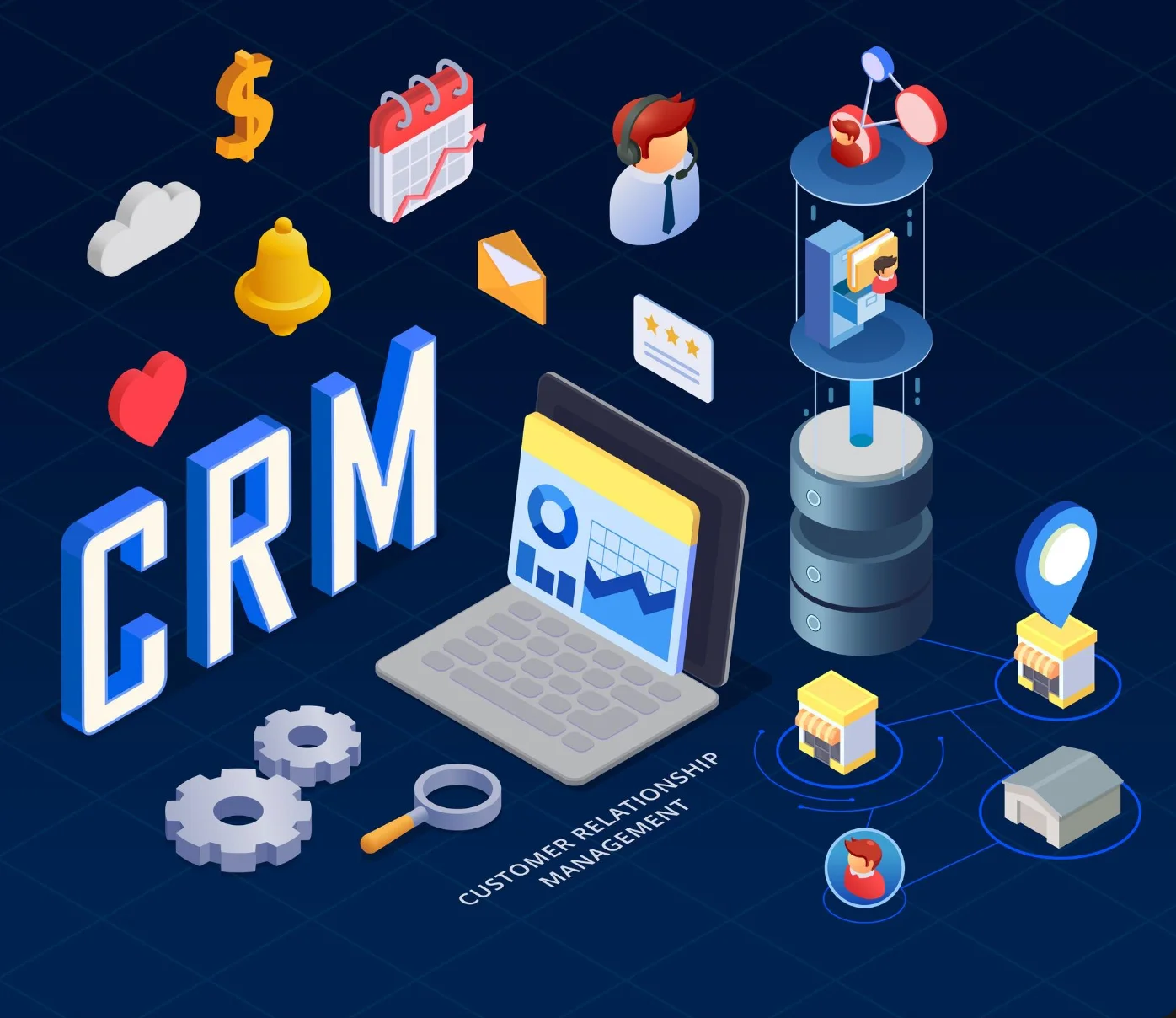
A customer relationship management (CRM) system is a system used by companies to manage interactions, communications, data, and relationships with customers in a structured manner.
CRM helps companies in:
Collecting customer data
Tracking purchase history
Managing sales leads
Monitoring customer activity
Automating marketing
Providing more personalized customer service
Simply put, CRM allows companies to understand customers more deeply, thereby creating stronger, long-term relationships.
CRM is not just software, but also a business strategy that focuses on a customer-centric approach, or an approach that places the customer at the center of the business.
Why Is Customer Loyalty So Important?
Many businesses are still too focused on acquiring new customers without paying attention to existing ones. However, loyal customers have tremendous business value.
Some reasons why customer loyalty is important:
1. Lower Acquisition Costs
Acquiring new customers requires much higher marketing costs than retaining existing customers.
2. Higher Repeat Orders
Loyal customers tend to make repeat purchases because they already trust the brand.
3. Increase Customer Lifetime Value
The longer customers stay, the greater the total profit generated.
4. Word of Mouth Marketing
Loyal customers often recommend the business to friends or family.
5. Revenue Stability
Businesses with loyal customers have a more stable revenue stream.
Research shows that effective CRM can increase customer loyalty through service personalization, improved customer satisfaction, and better relationship management.
Main Functions of a Customer Relationship Management System
1. Manage Customer Database
CRM stores all customer information in a centralized system, such as:
Customer name
Contact
Transaction history
Customer preferences
Communication history
Customer complaints
With organized data, companies can provide faster and more personalized service.
2. Improve Service Quality
Customer service can view complete customer history, making problem handling more effective.
Example:
When a customer contacts CS, the team can immediately find out:
Products purchased previously
Previous complaints
Customer preferences
Transaction status
This significantly improves the customer experience.
3. Marketing Automation
CRM enables the automation of various marketing activities such as:
Email marketing
Customer follow-up
Payment reminders
Personalized promotions
Customer segmentation
Automation helps businesses work more efficiently while increasing customer engagement.
4. Monitoring Sales Pipeline
Sales teams can monitor the prospect journey from:
Incoming leads
Negotiation
Follow-up
Closing
Customer retention
With a clear pipeline, the chance of losing prospects is smaller.
5. Customer Data Analysis
CRM provides reports and analysis that help companies understand:
Customer behavior
Most popular products
Customer retention rate
Purchasing patterns
Churn rate
These data form the basis for business decision-making.
Types of Customer Relationship Management Systems
1. Operational CRM
Focuses on automating business processes such as:
Sales automation
Marketing automation
Customer service automation
This type of CRM is most commonly used by companies.
2. Analytical CRM
Analyzes customer data to understand customer behavior and trends.
Typically used for:
Data mining
Customer segmentation
Predictive analytics
3. Collaborative CRM
Improves collaboration between departments such as:
Sales
Marketing
Customer support
The goal is for all teams to have the same customer information.
Key Components in a CRM System
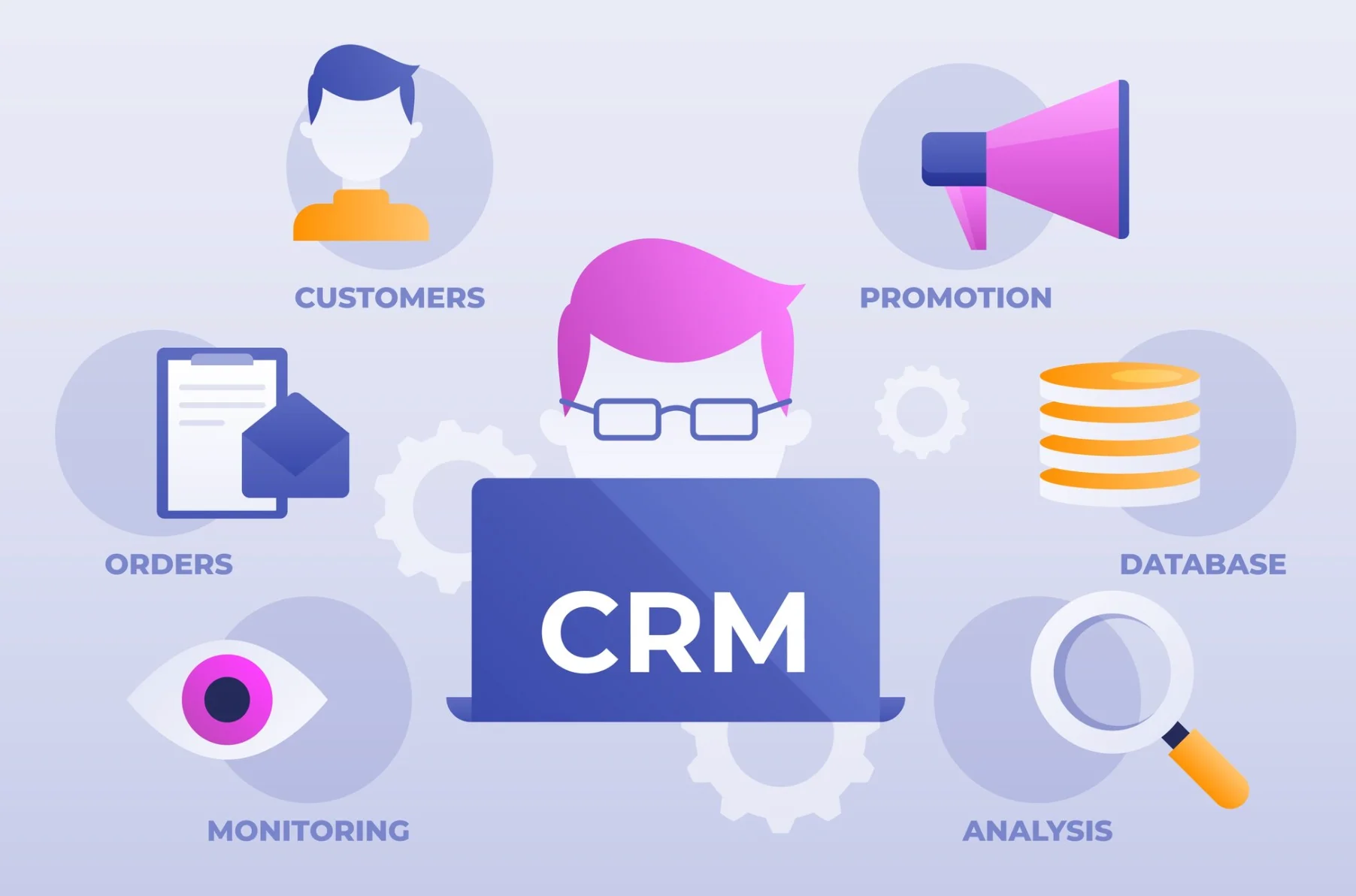
Customer Database
Central repository for all customer data.
Sales Automation
Helps sales teams work more efficiently.
Marketing Automation
Manages automated marketing campaigns.
Customer Service Management
Ensures faster and more accurate customer service.
Reporting and Analytics
Provides data-driven business insights.
How Customer Relationship Management Systems Improve Customer Loyalty
1. Personalizing the Customer Experience
Modern customers appreciate personalized experiences.
CRM helps companies provide:
Product recommendations
Promotions tailored to interests
Personalized greetings
Offers based on purchase history
Personalization makes customers feel valued.
2. Faster Response
Customers don't like to wait long.
With CRM:
Faster ticketing
Immediate access to customer history
More responsive customer service
This increases customer satisfaction.
3. More Consistent Communication
CRM helps maintain customer communication through:
Email
WhatsApp
SMS
Social media
Consistent communication strengthens business relationships.
4. More Effective Loyalty Programs
CRM helps companies create data-driven loyalty programs.
Examples:
Rewards for active customers
Personalized discounts
Membership tiers
Cashback based on shopping habits
Recent digital marketing community discussions also show that modern loyalty programs now emphasize personalization, real-time engagement, and behavioral rewards more than traditional point systems.
5. Reduce Customer Churn
CRM can detect signs that customers are about to stop using a service.
Indicator examples:
Decrease in transactions
Infrequent email opens
Inactivity in the application
With this data, companies can take preventive action.
Effective CRM Implementation Strategies
Define Business Objectives
Before CRM implementation, companies must define primary objectives such as:
Increasing customer loyalty
Boosting sales
Improving customer service
Reducing churn
Choose the Right CRM for Your Needs
Every business has different needs, especially regarding operational scale, process complexity, and the level of system integration used. Therefore, CRM selection cannot be based solely on platform popularity, but must be aligned with long-term business needs.
Factors to consider:
Business scale
Implementation and operational budget
Number of customers and data complexity
Integration needs with other systems (ERP, accounting, marketing tools)
Ease of use for internal teams
In practice, there are two main approaches commonly used by companies:
1. Off-the-shelf SaaS CRMs (Examples: Salesforce, HubSpot)
SaaS-based CRMs are suitable for companies looking for quick implementation without developing systems from scratch.
Key characteristics:
Fast implementation and no lengthy development required
Comes with standard features such as sales pipeline, lead management, and reporting
Monthly or annual subscription fees
Infrastructure and maintenance handled by the vendor
Advantages:
Quick to use (short time-to-value)
Suitable for SMEs to mid-market
Mature feature ecosystem
Limitations:
Customization limited to specific workflows
Dependence on the vendor ecosystem
Costs can increase with user and feature scalability
Complex integration with certain internal systems often requires additional costs or middleware
2. Custom CRM (Custom Software by BMS Services)
The custom CRM approach is more suitable for companies with unique business processes or existing internal systems such as ERP, production systems, or complex data warehouses.
This approach is widely used in solutions developed by BMS Services Indonesia.
Key characteristics:
System built according to the company's business flow, not a general template
Full integration with ERP, HRIS, accounting, or legacy systems
Database structure and workflow can be fully customized
Developed for long-term needs and high scalability
Advantages:
Full flexibility over business processes
Deeper and more consistent internal system integration
Not dependent on SaaS vendor feature limitations
Can be tailored to specific industry needs (manufacturing, multi-branch retail, distribution)
Limitations:
Longer implementation time compared to SaaS
Requires business process analysis at the outset
Higher initial investment, but more efficient in the long run for medium to large-scale companies
SaaS CRMs like Salesforce or HubSpot are more suitable for companies that need quick and standard solutions. However, for companies with complex, multi-system business processes and a need for deep integration, a custom CRM becomes a more strategic choice.
A custom CRM approach, such as that developed by BMS Services Indonesia, allows companies to build systems that truly follow their business operations, not the other way around.
Customer Data Integration
All customer data must be centralized in one system.
Team Training
CRM will not be effective without proper use.
The entire team needs to understand:
How to input data
How to read reports
How to utilize automation
Monitoring and Evaluation
CRM implementation must be evaluated periodically through:
Customer retention rate
Customer satisfaction score
Repeat order rate
Customer lifetime value
Case Study: CRM Implementation to Enhance Customer Loyalty
Case Study 1: Leading FMCG Distributor in Indonesia
A leading FMCG Distributor in Indonesia experienced a decline in repeat orders because customers found promotions too generic and irrelevant.
Problem:
Impersonal email blasts
Low open rate
High customer churn
Solution:
The company implemented a customer relationship management system with:
Customer segmentation
Automated product recommendations
Personalized email marketing
Abandoned cart reminders
Results:
Increased repeat orders
Increased customer engagement
Significantly increased customer loyalty
Case Study 2: Telecommunications Company
A telecommunications company used CRM to predict customer churn.
Strategy:
Customer behavior analysis
Detection of service usage decline
Special retention offers
Results:
Decreased churn rate
Increased customer satisfaction
More stable revenue
Research related to predictive modeling in CRM also shows that customer behavior analysis can help companies take preventive actions before customers actually stop using services.
Challenges in CRM Implementation
1. Disintegrated Data
Many companies have customer data scattered across various platforms.
2. Lack of Team Adoption
CRM fails if teams do not use it consistently.
3. Implementation Costs
CRM implementation requires investment in:
Software
Infrastructure
Training
Maintenance
4. Data Security
Customer data is a sensitive asset, making security a top priority.
5. Lack of Customer-Centric Strategy
CRM is not just software, but a business culture change.
CRM Trends in the Digital Era
AI and Machine Learning
Modern CRM uses AI for:
Churn prediction
Chatbots
Automated recommendations
Customer behavior analysis
Omnichannel CRM
Integration of all communication channels:
WhatsApp
Email
Live chat
Social media
Website
Mobile CRM
Accessing CRM via smartphone simplifies tasks for sales and customer support teams.
Real-Time Personalization
Modern CRM can deliver personalized experiences in real-time.
Indicators of CRM Success
Customer Retention Rate
Measures a company's ability to retain customers.
Net Promoter Score (NPS)
Measures the likelihood of customers recommending the brand.
Customer Satisfaction Score
Measures customer satisfaction.
Repeat Purchase Rate
Measures repeat purchases.
Customer Lifetime Value
Measures the total value of a customer over the business relationship.
Conclusion
Amidst increasingly fierce digital business competition, implementing a customer relationship management system is no longer an option, but a necessity.
CRM helps companies:
Understand customers more deeply
Provide more personalized service
Increase customer satisfaction
Reduce churn
Build long-term loyalty
Businesses that can build strong customer relationships will have a much greater competitive advantage than those that only focus on short-term sales.
Recent research also continues to reinforce that CRM positively impacts customer loyalty through improved customer experience, customer satisfaction, and service personalization.
Boost Your Business's Customer Loyalty Now
Want to develop an effective customer relationship management system for your business?
Visit BMS Services to get digital solutions, customer relationship management, digital marketing strategies, and business system development that help increase customer loyalty and sustainable business growth.