Software House Surabaya | Professional Custom Software Services
Trusted Software House in Surabaya for websites, ERP, CRM, mobile applications, and custom software. Scalable and efficient digital solutions for businesses.
Surabaya Software House: Digital Solutions for Boosting Business Efficiency and Growth
In today's digital era, almost all companies rely on technology to run operations, serve customers, manage data, and make business decisions. However, not all companies can use off-the-shelf software because every business has different processes, needs, and challenges.
This is why many companies are starting to work with a Surabaya software house to build systems that truly fit their needs.
Surabaya, as the second-largest metropolitan city in Indonesia, has grown into a hub for technology and business digitalization. Many companies across manufacturing, logistics, distribution, retail, education, healthcare, and tech startups utilize software house services to develop websites, mobile applications, ERPs, CRMs, business dashboards, and AI-based automation systems. Various software houses in Surabaya offer web and mobile application development, ERP, CRM, API integration, and AI solutions for corporate digital transformation.
What Is a Software House?
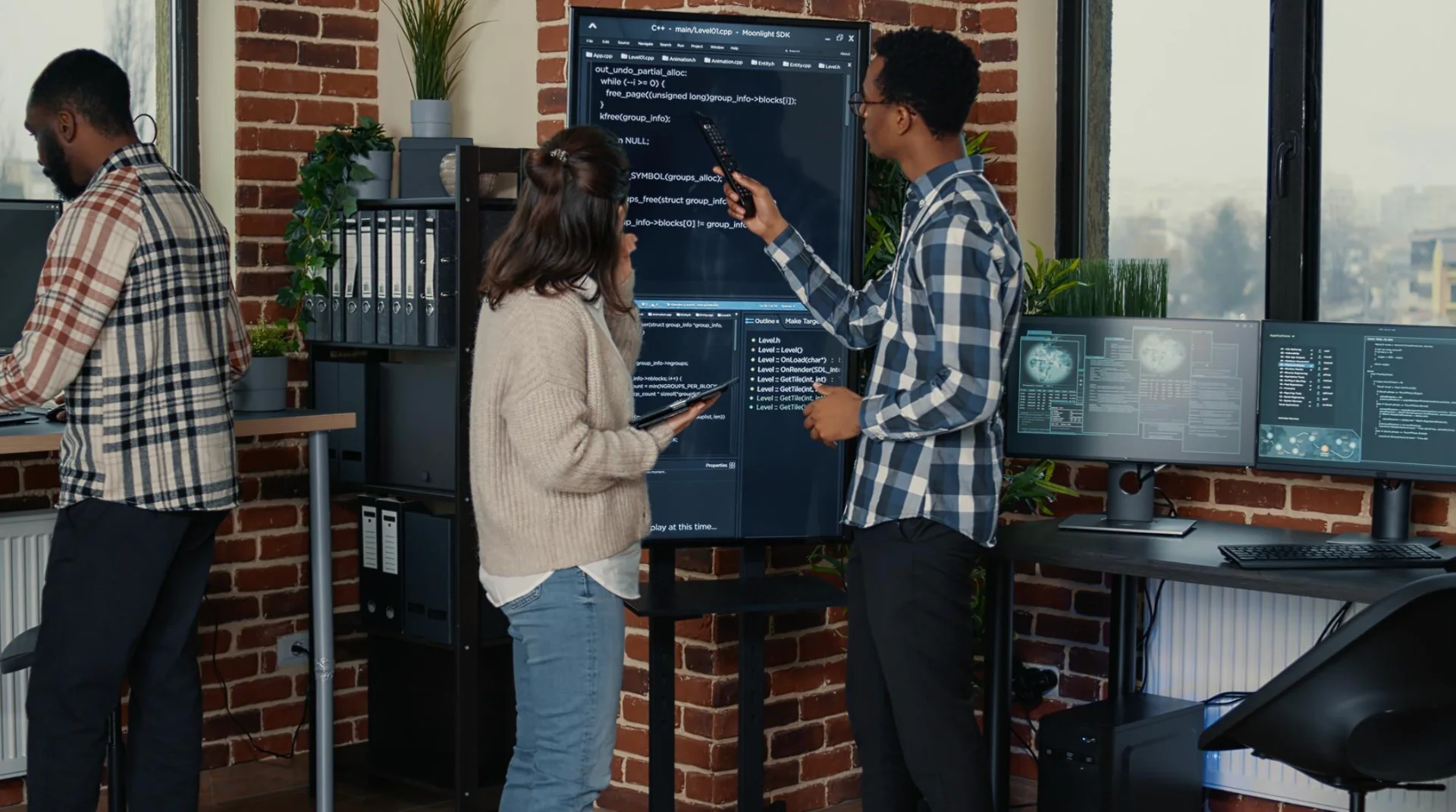
A software house is a company focused on developing software to help businesses solve operational problems, increase efficiency, and create new growth opportunities.
The services typically provided by a software house include:
Custom software development
Website development
Mobile application development
ERP development
CRM development
API integration
Business intelligence dashboard
AI automation
Maintenance and support
Cloud migration
UI/UX design
Unlike off-the-shelf software, software developed by a software house is custom-designed to meet a company's specific needs, making it more flexible and scalable.
Why Do Many Companies in Surabaya Use a Software House?
Many businesses initially use spreadsheets, WhatsApp, email, and manual processes for daily operations. However, as businesses grow, these methods start to cause various problems such as:
Decentralized data
Data entry errors
Difficulty monitoring business performance
Slow work processes
Duplication of work
Difficulty performing data analysis
Custom software helps solve these problems by automating business processes that were previously done manually.
Research on software development and business strategy shows that companies capable of aligning technology with business goals can improve operational effectiveness and data-driven decision-making.
When Does a Business Need a Software House?
Here are some signs that your business needs a software house:
1. Data Scattered in Many Places
The sales team uses Excel, the finance team uses different accounting software, while the operations team uses WhatsApp and Google Sheets.
As a result:
Data is not synchronized
Difficult to generate reports
Frequent human errors
2. Increasingly Complex Operations
The larger the company, the more processes need to be managed:
Purchasing
Inventory
Production
Sales
HR
Finance
Custom software can integrate all these processes into one system.
3. Requires Automation
Repetitive tasks such as:
Data input
Invoice creation
Customer follow-up
Payment reminders
Can be automated through a specially developed system.
4. Desire to Use AI in Operations
Many companies are now starting to implement:
AI Customer Service
AI CRM
AI Business Analytics
AI Lead Qualification
AI Reporting
To improve efficiency and productivity.
Services Typically Offered by Software Houses in Surabaya

Custom ERP Development
ERP (Enterprise Resource Planning) helps companies manage:
Purchasing
Inventory
Production
Sales
Finance
Human Resources
Within a single integrated system.
CRM Development
CRM helps manage:
Leads
Customer database
Sales follow-up
Sales pipeline
Customer retention
Website Development
Modern websites are no longer just company profiles.
Websites can be used for:
Lead generation
Customer portal
Online ordering
Membership system
E-learning
Mobile Application Development
Mobile applications enable customers and internal teams to access systems anytime and anywhere.
AI Integration
Today, modern software houses also offer AI integration for:
Chatbots
Customer support
Sales automation
Predictive analytics
Business intelligence
Case Study: Digitalization of a Distribution Company in Surabaya
A food distribution company in Surabaya experienced various operational challenges.
Initial Condition
They used:
Excel for stock
WhatsApp for sales communication
Manual reporting
Spreadsheets for sales
Issues encountered:
Inaccurate stock levels
Delayed reports
Incorrect product deliveries
Difficulty monitoring sales performance
Solution
The company collaborated with a software house to build a custom ERP system that includes:
Inventory management
Sales management
Delivery tracking
Purchase management
Management dashboard
Results After Implementation
Within six months:
Report generation time decreased by 80%
Stock errors significantly reduced
Sales productivity increased
Faster decision-making due to real-time data availability
Such cases are common for growing businesses that require systems tailored to their business processes.
Why Is Custom Software More Advantageous?
Many companies hesitate because custom software requires a larger initial investment.
However, in the long run, custom software offers benefits:
Flexible
Adaptable to business needs.
Scalable
Able to accommodate company growth.
Easier Integration
Can connect with:
Marketplaces
Payment gateways
ERP
CRM
Third-party systems
More Secure Data
Companies have full control over data and infrastructure.
Technologies Used by Modern Software Houses
Professional software houses typically use modern technologies such as:
Front-End
React
Next.js
Vue.js
Back-End
Laravel
Node.js
Python
.NET
Mobile
Flutter
React Native
Kotlin
Swift
Database
PostgreSQL
MySQL
MongoDB
Cloud Infrastructure
AWS
Google Cloud
Microsoft Azure
The agile approach is also widely used because it allows more flexible software development and quick adaptation to changing business needs.
How to Choose the Right Surabaya Software House
Before choosing a vendor, consider the following:
Portfolio
Ensure the software house has experience in relevant industries.
Internal Team
Check if they have:
Project Manager
UI/UX Designer
Front-End Developer
Back-End Developer
QA Engineer
Development Process
A good vendor has the following stages:
Discovery
Requirement gathering
Design
Development
Testing
Deployment
Maintenance
Long-Term Support
Software requires continuous maintenance and development.
Therefore, choose a partner who can provide support after the system is built.
Differences Between Software House and Freelancer
Many companies undergoing digital transformation often face a choice between using freelancers or collaborating with a software house. While both can help develop applications or websites, there are significant differences in terms of resources, quality, and project sustainability.
Freelancers generally work individually and are suitable for simple projects with limited scope. However, when a project involves multiple modules, system integration, data security, and long-term development needs, companies often require a more complete team.
A software house typically has various specialists who work collaboratively, such as:
Business Analyst
UI/UX Designer
Front-End Developer
Back-End Developer
Mobile Developer
QA Engineer
Project Manager
DevOps Engineer
This collaboration among specialists helps ensure that the software built not only functions well but is also user-friendly, secure, and ready to evolve with business needs.
Professional Software Development Stages
Many companies view software development as merely a coding process. In reality, coding is only a small part of the entire process.
A professional software house typically uses a more structured approach.
Discovery Session
The first stage is a thorough understanding of the client's business.
The team will study:
Organizational structure
Operational workflows
Pain points
Business targets
User needs
The goal is to ensure the software built genuinely solves existing business problems.
Business Process Mapping
Before software creation, the entire business process is mapped out.
For example:
Incoming order process → validation → payment → production → delivery → invoice → management report.
This mapping helps identify bottlenecks that have hindered company operations.
UI/UX Design
Once the system requirements are understood, the design team begins creating wireframes and prototypes.
This stage is important because:
It reduces revisions during development
It ensures the user flow is easy to understand
It speeds up system adoption by users
Development
Only after the design is approved does the coding process begin.
Development is typically carried out in stages using the Agile Sprint method, allowing the client to see progress periodically.
Quality Assurance
Before the system is deployed, all features are tested to ensure:
No critical bugs
Optimal performance
Adequate security
Smooth integration
Deployment and Maintenance
Once the system goes live, the software house continues to perform:
Monitoring
Backup
Security updates
Bug fixes
New feature development
Software Integration with Existing Systems
One of the biggest challenges in digitalization is integrating with systems already in use by the company.
Experienced software houses can connect various platforms via APIs, allowing data to flow automatically without manual input.
Common integration examples include:
Marketplace Integration
Tokopedia
Shopee
Lazada
Order data can directly flow into the company's internal system.
Accounting Integration
Accurate
Jurnal
Xero
Transaction data can be synchronized automatically.
CRM Integration
HubSpot
Salesforce
Zoho CRM
Sales teams can work with more accurate and real-time data.
Payment Gateway Integration
Midtrans
Xendit
DOKU
Helps online payment processes run more efficiently.
Surabaya Software House for the Manufacturing Industry
Surabaya has many manufacturing companies facing complex operational challenges.
Some frequently developed systems include:
Manufacturing ERP
Production Planning System
Inventory Management
Warehouse Management System
Quality Control System
Machine Monitoring Dashboard
By digitalizing production processes, companies can gain better visibility into operational performance.
Surabaya Software House for Distribution Companies
Distribution companies typically face challenges in:
Stock management
Goods delivery
Sales monitoring
Supplier management
Custom software can help automate these processes so management has real-time data for decision-making.
Frequently needed features include:
Sales Tracking
Delivery Tracking
Route Management
Inventory Monitoring
Purchase Management
Surabaya Software House for the Service Sector
Service companies also have unique digitalization needs.
Some commonly developed solutions are:
Customer Portal
Booking System
Ticketing System
Membership Platform
Project Management System
With integrated systems, companies can enhance service quality and customer experience.
Data Security in Software Development
Security is one of the most crucial aspects of modern software development.
Professional software houses typically implement:
Role-Based Access Control
Each user can only access data corresponding to their access rights.
Data Encryption
Sensitive data is encrypted to mitigate the risk of information leaks.
Automated Backups
Data is regularly backed up to prevent loss due to system failures.
Audit Log
Every user activity is recorded, facilitating audit and investigation processes.
Future Trends in Software Development
In the coming years, technological advancements will increasingly impact how companies operate.
Some trends that companies are widely adopting include:
AI-Powered Business System
Systems capable of providing automated recommendations based on business data.
Workflow Automation
Reducing manual work through process automation.
Predictive Analytics
Helping companies predict sales trends, market demand, and inventory needs.
AI Customer Service
Chatbots and virtual assistants capable of serving customers 24 hours a day.
AI CRM
CRM systems that can help sales teams prioritize prospects with the highest conversion potential.
Business Intelligence Dashboard
Real-time dashboards that present crucial data in a visually easy-to-understand format for management.
The Future of Software Development in Surabaya
Demand for custom software continues to grow as more companies undergo digital transformation.
Some trends expected to continue evolving:
AI Automation
AI CRM
Predictive Analytics
Business Intelligence
Workflow Automation
Paperless Office
ERP Cloud
Customer Self-Service Portal
IoT Integration
Companies that more quickly adopt technology generally have a competitive advantage over competitors who still rely on manual processes.
BMS Services: Your Business Digitalization Partner
If your business needs a professional website, custom ERP, CRM, mobile applications, API integration, or AI Automation solutions, partnering with a team that understands business processes is as important as technical capability.