Digital Transformation Solutions for Modern Businesses
Need a digital transformation solution for your business? BMS Services helps companies build digital systems, operational automation, ERP, CRM, and AI automation
Digital Transformation Solutions for Business Efficiency and Growth
Technological changes have transformed how companies operate. Competition is intensifying, customers demand more practical services, and business operations are becoming increasingly complex. In this environment, companies still relying on manual processes will find it increasingly difficult to grow efficiently.
Therefore, digital transformation is a crucial step for modern companies to enhance operational efficiency, accelerate business growth, and build a more scalable work system.
Digital transformation is not just about creating a website or using new software. Digital transformation is the process of building an integrated business ecosystem through technology so that all company operations run more effectively, automatically, and are data-driven.
BMS Services Indonesia assists companies in digital transformation through custom software development, ERP, CRM, operational dashboards, AI automation, system integration, and various technology solutions designed to meet business needs.
What Is Digital Transformation?
Digital transformation is the process of using digital technology to change how a company works, serves customers, manages data, and runs business operations as a whole.
Digital transformation typically involves:
Workflow automation
Enterprise system integration
Cloud technology adoption
Business intelligence dashboards
CRM and ERP
AI automation
Operational digitalization
Data analytics
Customer experience improvement
The main goal of digital transformation is to help companies work faster, more efficiently, measurably, and be ready to grow long-term.
Why Is Digital Transformation Important?
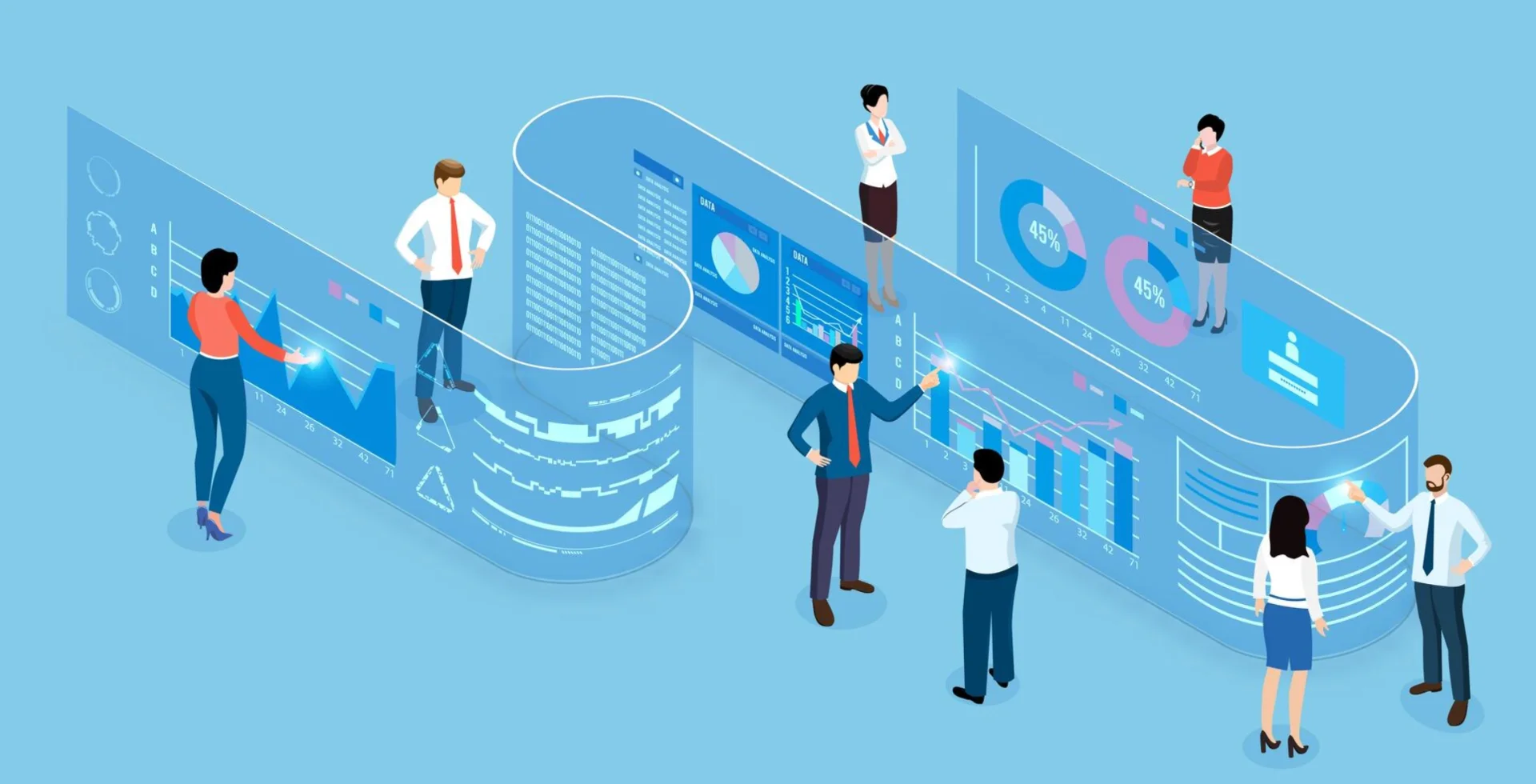
Many businesses grow faster than their operational systems. When a company starts having many customers, transactions increase, and the team size grows, manual processes become a major obstacle.
Common problems in undigitized companies:
Data scattered across many platforms
Slow operational approvals
High human error
Difficulty monitoring business in real-time
Time-consuming reporting
Asynchronous inter-divisional communication
Difficulty scaling the business
Inefficient customer service
Many repetitive administrative tasks
Without a good digital system, companies will struggle to maintain operational efficiency as the business grows larger.
Signs Your Company Needs Digital Transformation
Many companies actually need digital transformation but are not yet aware of it.
Here are some signs your business needs digital transformation:
Teams still rely on manual spreadsheets
Data is not synchronized between divisions
Many approvals via chat or email
Difficulty tracking business performance
Reports are not real-time
Operational workflows are too manual
Customer data is disorganized
Teams struggle with collaboration
Operations are becoming inefficient
Business processes are difficult to scale up
If some of these problems begin to occur, then digital transformation can be a strategic long-term solution.
Digital Transformation Is More Than Just a Website
One of the biggest mistakes in understanding digital transformation is to think that digital transformation is only about creating a website.
In fact, a modern website is actually only the frontend part of a larger business system.
Behind the website, modern companies typically have:
ERP system
CRM
Inventory management
AI automation
Dashboard analytics
Customer portal
Workflow automation
Payment integration
Business intelligence system
A website functions as an interface to connect customers with all these business operational systems.
Therefore, effective digital transformation must include the integration of all business processes, not just the online visual appearance.
Key Components of Digital Transformation
1. Business Process Automation
Workflow automation helps reduce manual work and increase efficiency.
Examples of automation:
Automated approvals
Automated reminders
Auto reporting
Automated lead distribution
Invoice automation
Workflow task management
Automation helps companies reduce human error and accelerate operations.
2. ERP (Enterprise Resource Planning)
ERP helps integrate all company divisions within one system.
ERP typically includes:
Finance
Purchasing
Inventory
HR
Sales
Warehouse
Production
With ERP, all divisions work using the same data in real time.
3. CRM (Customer Relationship Management)
CRM helps companies manage customer relationships in a more structured way.
CRM functions:
Monitoring leads
Tracking sales pipeline
Follow-up automation
Customer database
Customer analytics
4. Business Intelligence Dashboard
Dashboard analytics help management monitor business conditions in real time.
Data that can be monitored:
Sales
Company KPIs
Team productivity
Conversion rate
Cash flow
Inventory movement
5. AI Automation
AI is becoming an important part of modern digital transformation.
Examples of AI implementation:
AI chatbot
AI customer support
AI analytics
AI sales assistant
AI workflow automation
AI document processing
Company Challenges Without Digital Transformation

Companies still using manual systems typically face various operational obstacles.
Disconnected Data
Each division uses a different platform, making data synchronization difficult.
High Human Error
Manual input increases the risk of operational errors.
Slow Process
Approval and reporting take too long.
Difficult Business Monitoring
Owners and management struggle to see business conditions in real time.
Operational Difficulties in Scaling Up
As businesses grow, manual systems become unable to keep up with operational complexity.
Case Study: Distribution Company Reduces Manual Operations by Up to 75%
One of BMS Services Indonesia's clients is a distribution company that faced various operational problems.
Before digital transformation, the company used:
Manual spreadsheets
Approval via WhatsApp
Manual reporting
Separate sales data
Non-real-time inventory
The consequences:
High human error
Slow approvals
Difficult business monitoring
Unsynchronized data
Time-consuming reporting
Solutions Developed
BMS Services helps companies undergo digital transformation through:
Real-time operational dashboards
Customer CRM
Inventory integration
Workflow automation
Digital approval system
Automated reporting
Cloud infrastructure
Mobile responsive dashboard
Results After Implementation
After system implementation:
Manual operations reduced by up to 75%
Faster reporting
More accurate data
Significant decrease in human error
Increased team productivity
Real-time business monitoring
The company is also more ready to scale up operations because all workflows have been digitized.
The Role of Cloud Technology in Digital Transformation
Cloud infrastructure is a critical foundation in modern digital transformation.
Benefits of cloud systems:
Access from anywhere
Multi-branch monitoring
Automatic backups
High scalability
Easier maintenance
High availability system
The cloud enables companies to work more flexibly and efficiently.
System Integration in Digital Transformation
One of the most important aspects of digital transformation is system integration.
Modern business applications typically need to connect with:
ERP
CRM
Marketplace
Payment gateway
WhatsApp API
Accounting software
HR system
Inventory system
Logistic platform
Integration helps create more automated and efficient business workflows.
Technical Challenges in Digital Transformation
Digital transformation also presents quite complex technical challenges.
API Rate Limit
Integration between platforms is often limited by a certain number of API requests.
Data Mapping Error
Every system has a different data structure, so synchronization requires detailed mapping.
Migration Complexity
Migrating data from old to new systems often presents a significant challenge.
Security Risk
The more digital systems there are, the more essential corporate data security becomes.
Scalability Challenge
Systems must be designed to handle long-term business growth.
Therefore, digital transformation requires thorough architecture planning.
Data Security in Digital Transformation
Company data is a critical asset, so system security must be a top priority.
Commonly used security features include:
Role management
Authentication system
SSL encryption
Activity logging
Automatic backup
Database protection
Session management
Security is especially crucial for data such as:
Customer
Financial
Transaction
Internal operational
Digital Transformation and Customer Experience
Digital transformation impacts not only internal operations but also customer experience.
Companies can provide better services through:
Faster response
Customer portal
Real-time tracking
AI chatbot
Omnichannel communication
Personalized experience
This helps improve customer satisfaction and loyalty.
The Future of Digital Transformation
Moving forward, digital transformation will continue to evolve with technologies such as:
AI automation
Predictive analytics
IoT integration
Real-time business intelligence
Hyper automation
Cloud-native architecture
Machine learning
Companies that adapt more quickly to technology will have a greater competitive advantage.
Digital Transformation and the Evolution of Modern Company Workflows
One of the biggest impacts of digital transformation is not just technological change, but a complete shift in how companies operate.
Many businesses initially only wanted to “use software” to assist operations. However, in practice, digital transformation often changes:
Internal communication flows
Decision-making process
Operational workflow
Team monitoring methods
Customer service speed
Company reporting structure
Inter-division collaboration system
Therefore, digital transformation is not merely an IT project, but part of a long-term business strategy.
Companies that successfully undergo digital transformation typically have operations that are:
Faster
More measurable
More scalable
More efficient
Easier to develop
The Importance of Data in Digital Transformation
In the digital age, data is one of the most important assets in a company.
However, many businesses face problems such as:
Data spread across many platforms
No central database
Data is difficult to analyze
Reporting is not real-time
A lot of data is inaccurate
As a result, decision-making is often based on assumptions, not actual data.
Digital transformation helps companies build a more structured data management system through:
Centralized database
Real-time analytics
Business intelligence dashboard
Customer analytics
Sales analytics
Operational reporting
With more accurate data, companies can make decisions faster and more precisely.
Digital Transformation and Operational Efficiency
One of the main goals of digital transformation is to improve operational efficiency.
Many companies have workflows that could actually be automated but are still being done manually.
Examples:
Before Digitization
Approval via chat
Repetitive data entry
Manual reporting
Difficult job tracking
Manual customer follow-up
Non-real-time stock monitoring
After Digitization
Automated approval workflow
Real-time dashboards
Auto reporting
Automated reminders
Integrated CRM
Automated inventory sync
These changes help companies reduce administrative burden and increase team productivity.
Digital Transformation for Multi-Branch and Large-Scale Businesses
The more branches or divisions a company has, the more important an integrated digital system becomes.
Without a good system, companies typically experience:
Out-of-sync data between branches
Difficulty monitoring branch performance
Slow reporting
Non-standardized operations
Coordination difficulties between teams
Through digital transformation, all branches can work using the same system so that:
Data becomes real-time
SOPs are more consistent
Monitoring is easier
More structured operations
This is very important for growing or expanding businesses.
Customer Experience in Digital Transformation
Digital transformation also directly impacts customer experience.
Modern customers want services that are:
Fast
Practical
Responsive
Transparent
Easily accessible
Therefore, many companies are starting to build systems such as:
Customer portals
Online tracking systems
AI chatbots
Omnichannel support
Automated notifications
Self-service platforms
These technologies help improve customer satisfaction and customer retention.
Workflow Automation as the Foundation of Digital Transformation
Workflow automation is one of the most important elements in modern digital transformation.
Automation helps reduce repetitive tasks such as:
Manual data input
Repetitive approvals
Follow-up reminders
Report generation
Lead distribution
Task assignment
With good automation, companies can:
Reduce human errors
Accelerate operations
Reduce workflow bottlenecks
Increase team efficiency
Automation also helps companies remain efficient even as operational volume continues to increase.
Digital Transformation and AI Integration
AI automation is a significant development in modern digital transformation.
Companies are now beginning to use AI for various operational needs such as:
AI Customer Service
Helps answer customer questions automatically 24/7.
AI Analytics
Helps read business trends and make predictions based on historical data.
AI Workflow Automation
Automates administrative and operational processes.
AI Lead Qualification
Helps categorize and prioritize leads automatically.
AI Document Processing
Helps read, manage, and process company documents faster.
In the future, AI integration will become one of the main foundations of modern business systems.
Business Website as the Center of the Digital Ecosystem
Modern websites no longer function solely as media for company information.
In digital transformation, a website can become:
CRM frontend
Customer portal
Operational dashboard
AI interaction interface
Booking system
E-commerce platform
Business analytics portal
Users only see a simple website display, but behind it is a complex operational system working automatically.
This approach helps companies build a more modern and efficient digital experience.
Human Resource Challenges in Digital Transformation
One of the biggest challenges in digital transformation isn't technology, but human adaptation.
Many companies face issues such as:
Teams struggle to adapt to new systems
Resistance to workflow changes
Lack of digital training
Difficulty changing manual work habits
Therefore, digital transformation implementation must be accompanied by:
Internal training
Digital workflow SOPs
Implementation assistance
System usage monitoring
Periodic operational evaluation
Successful digital transformation requires a combination of technology and human resource readiness.
The Importance of Scalability in Digital Systems
Many companies fail to scale up because their operational systems are not ready to expand.
Common problems include:
Systems become slow when users increase
Database overload
Reporting becomes more cumbersome
New integrations are difficult to implement
Unstable infrastructure
Therefore, scalability is a crucial factor in developing modern digital solutions.
At BMS Services Indonesia, every system is designed with long-term business growth in mind so that companies do not need to constantly replace systems as operations expand.
The Importance of Business Intelligence in Digital Transformation
Business intelligence helps companies understand business conditions more deeply through data analytics.
Business intelligence dashboards typically include:
Sales performance
Customer behavior
Operational KPI
Financial analytics
Conversion tracking
Productivity monitoring
With good analytics, companies can:
Identify problems faster
Determine business strategy more accurately
Optimize operations
Reduce inefficient costs
Business intelligence is a critical component in modern decision-making.
Digital Transformation as a Long-Term Investment
Many companies view digital transformation as a technology cost, but it is actually a long-term strategic investment.
Good digital systems help companies:
Reduce operational costs
Increase productivity
Accelerate business growth
Reduce human error
Simplify business scaling
Companies that build digital systems faster typically have a greater competitive advantage compared to businesses that still rely on manual processes.
Therefore, digital transformation is no longer an optional extra, but an essential step to sustain business growth in the modern digital era.
Why Choose BMS Services?
BMS Services Indonesia aids companies in building digital systems that truly meet business operational needs.
Our services include:
Custom enterprise application development
ERP and CRM development
Operational dashboards
AI automation
Workflow automation
System integration
Modern business websites
Cloud infrastructure
Our advantages:
Custom systems tailored to business workflows
Experienced developer team
Focus on operational efficiency
Scalable systems
Multi-platform integration
Long-term support
We understand that digital transformation isn't just about replacing old software, but about building a modern operational foundation that is more efficient and ready for growth.
If your business is starting to experience operational issues, unintegrated data, overly manual workflows, or difficulties monitoring your business in real-time, then now is the right time to begin your digital transformation.
Our team is ready to help design digital transformation solutions that meet your company's business needs.
Consult your business digitalization needs with BMS Services and build a modern operational system that is scalable, efficient, and ready to support long-term business growth.