Business Website for Digital Business Growth
Business websites boost credibility, sales, and market reach. Use professional website development services for modern company digital solutions.
The Importance of Business Websites for Business Growth in the Digital Age
In today's digital era, a business website is a crucial asset for companies aiming to enhance credibility, expand market reach, and boost sales. More than just an information medium, websites now function as digital operational hubs that can connect with various business systems such as CRM, ERP, marketing automation, and customer management systems. Consequently, many companies are now engaging professional website development services to build more modern, efficient, and competitive digital solutions for their businesses.
For small, medium, and large enterprises alike, having a professional business website is no longer merely an optional extra, but a vital component of a long-term growth strategy. In an increasingly competitive digital landscape, businesses without a website will find it harder to be discovered on Google, will be less trusted by potential customers, and will miss out on numerous sales opportunities.
Many business owners still rely solely on social media. However, without a structured and SEO-friendly business website, companies face limitations in building their brand, managing customer data, executing digital marketing campaigns, and consistently increasing sales conversions. This article will comprehensively discuss the importance of business websites, their benefits for companies, how they work, and case studies of website implementation for modern business growth.
What Is a Business Website?
A business website is an official digital platform used by companies to display information, products, and services, as well as to build credibility in the eyes of customers.
This website typically includes:
Company profile
Products or services
Contact information and location
Articles or blog
Customer testimonials
Unlike social media, a business website provides full control over branding, appearance, and marketing strategy.
The Role of Business Websites in Digital Marketing

A business website is the hub of the entire digital marketing strategy.
1. SEO (Search Engine Optimization)
With SEO optimization, a business website can appear on the first page of Google when potential customers search for related services.
Example:
If someone searches for “online ERP services,” your website could appear if it is well optimized.
2. Integration with Social Media
A website can connect with:
Instagram
Facebook
LinkedIn
WhatsApp
Social media serves to attract traffic, while the website becomes the conversion point.
3. Data and Analytics
A website allows you to:
Track visitors
Understand user behavior
Optimize marketing strategies
Benefits of Business Websites for Business Growth
1. Increase Sales
A website allows for:
Direct sales (e-commerce)
Lead generation
Service booking
All of these directly contribute to increased revenue.
2. Stronger Branding
A website helps build brand identity through:
Visual design
Communication tone
Quality content
A strong brand is more memorable and trustworthy.
3. Operational Efficiency
A website can automate many processes such as:
Order forms
Customer support
Automated FAQs
This reduces the team's workload.
Case Studies: Business Transformation with a Website
Case 1: Local Business Without a Website
A service business in Semarang relied solely on:
Problems faced:
Difficulty gaining trust from new clients
Did not appear on Google
Stagnant sales
Case 2: After Using a Business Website
After having a website:
Traffic increased by 300%
Leads increased by 2x
Business started acquiring clients from outside the city
Strategies used:
“Business website” SEO keyword
Quality blog articles
Clear CTAs
Result:
The website became the primary marketing engine.
Case Study 3: Retail Business Successfully Scaled Up with a Business Website
BackgroundA local fashion retail business initially only sold through:
Marketplaces (Shopee & Tokopedia)
Although sales were quite stable, they faced several challenges:
Very fierce price competition in marketplaces
Branding was difficult to develop
Did not have their own customer database
Small profit margins due to platform fees
Challenges FacedSome of the main problems they experienced:
Dependency on third-party platforms
Difficulty building customer loyalty
Inability to fully control brand appearance
No long-term strategy
Solution: Building Their Own Business Website
They finally decided to create a business website with the following features:
Online store (e-commerce)
SEO blog (fashion tips articles)
Promo landing pages
WhatsApp & email marketing integration
Strategies Implemented
Product and Article SEO
Targeted keywords such as:
“trendy women’s dress”
“casual women’s outfit”
Regular article creation to attract organic traffic
Consistent Branding
Website design aligned with brand identity
More professional communication tone
Customer Data Collection
Email subscription
Member program
Conversion Optimization
Clear CTAs, such as:
“Shop Now”
“Get Discount Today”
Achieved Results
Within 6 months:
Website traffic increased by up to 400%
Direct sales from the website accounted for 60% of total revenue
Repeat customers increased by 2.5x
Profit margin increased due to no marketplace commissions
Key Insights
From this case study, it can be concluded that:
A business website provides full control over sales
Branding is stronger compared to marketplaces
Customer data is a valuable asset
Advanced Business Website Strategy: From Just Online to a Growth Engine

Having a business website is the first step. However, what distinguishes an ordinary business from a rapidly growing one is how the website is optimized as a long-term strategic asset.
At this level, the website is no longer just a company profile, but:
A lead generation machine
A sales channel
A customer data hub
The foundation of a digital ecosystem
Optimizing Business Website Architecture for SEO and Conversion
Many businesses fail to grow because of an inappropriate website structure. However, website architecture significantly impacts:
Google ranking
User experience
Conversion rate
Ideal Business Website Structure
An effective business website typically has the following structure:
Homepage (Main Page)
Explains the core value of the business
Displays clear CTAs
Navigation to main services
Service Pages
Focuses on one service per page
Specific keyword targeting
Includes case studies & CTAs
Blog / SEO Articles
Targets informational keywords
Educates potential customers
Drives organic traffic
Landing Page
Focuses on conversions (ads / campaigns)
Minimal distractions
Strong CTA
Contact / Conversion Page
Lead form
WhatsApp integration
Clear contact information
Marketing Funnel in a Business Website
An effective business website always follows the concept of a marketing funnel:
1. Awareness
Users discover your business through:
Google (SEO)
Blog articles
Social media
2. Consideration
Users begin to:
Read articles
Compare services
View case studies
3. Decision
Users perform:
Filling out a form
Contacting via WhatsApp
Making a purchase
Without this funnel structure, a website merely becomes a "digital brochure" that yields no results.
The Role of SEO in Business Websites (Advanced Level)
SEO is not just about keywords, but about a comprehensive strategy.
1. Search Intent Optimization
Every keyword has a different purpose:
Informational → “what is a business website”
Commercial → “business website development services”
Transactional → “cheap business website creation”
A good website must cover all these intents.
2. Topical Authority
Google trusts websites that discuss a single topic in depth more.
Example:
If your focus is “business websites,” then there should be sub-articles such as:
benefits of a business website
cost of a business website
business website examples
business website strategy
The more comprehensive, the higher the ranking potential.
3. Internal Linking Strategy
Internal linking helps to:
Improve SEO
Increase visit duration
Direct users to conversion pages
Example:
Article → link to service page → link to CTA
Conversion Rate Optimization (CRO) on Business Websites
High traffic is meaningless without conversions.
Factors Affecting Conversion:
1. Clarity of Value Proposition
Users should immediately understand:
“What's in it for me?”
2. Trust Signals
Testimonials
Case studies
Portfolio
Client logos
3. Strategic CTAs
CTAs should not only be at the end, but also:
Within the content
At the top of the page
After important points
4. Website Speed
Slow website = high bounce = low conversion
Integrating Business Websites with Digital Systems
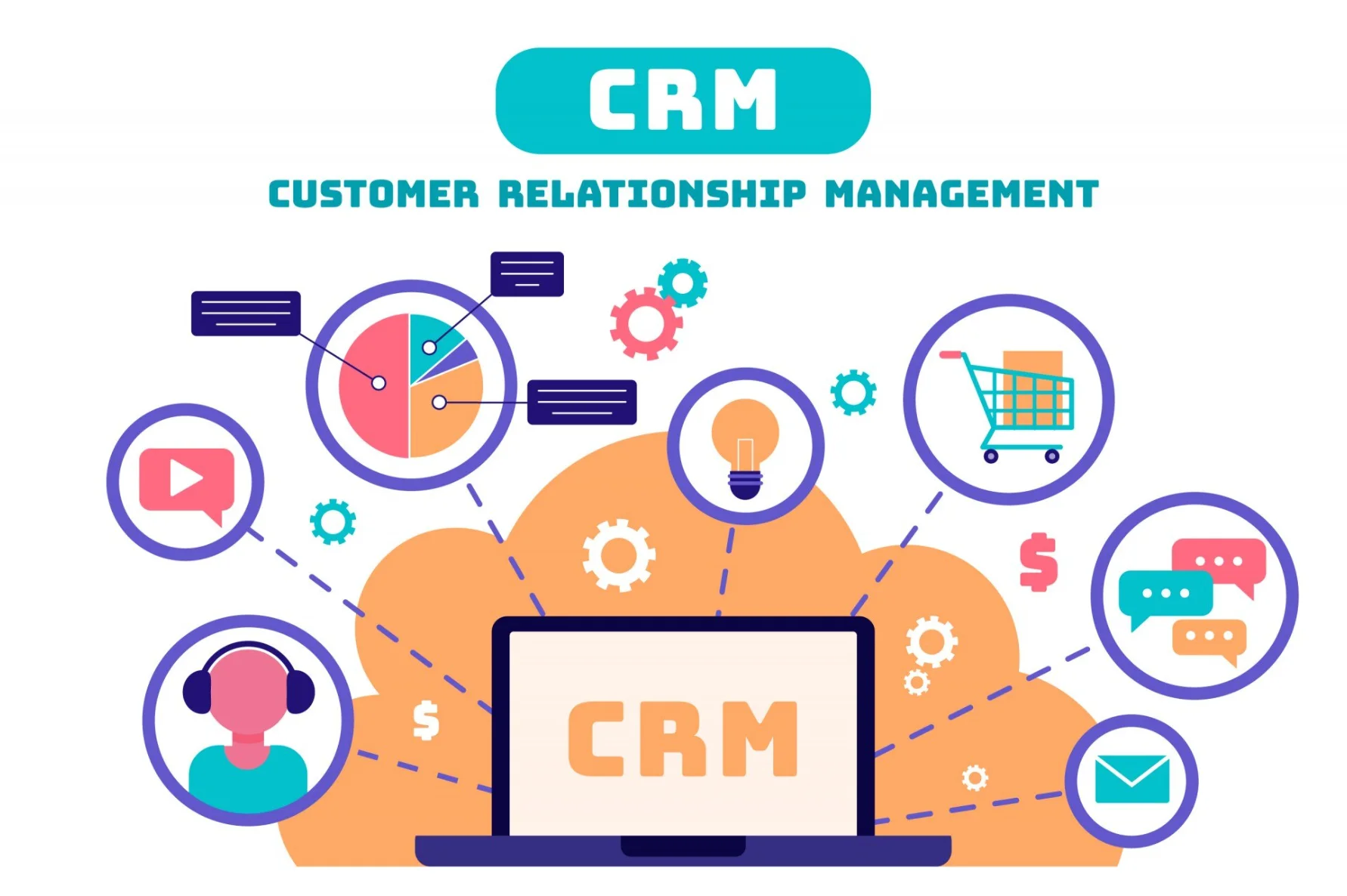
Modern websites do not stand alone. They must be integrated with other systems:
1. CRM (Customer Relationship Management)
To manage customer data
2. Email Marketing
To follow up on leads
3. Automation System
For:
Auto reply
Lead nurturing
Sales funnel automation
4. Analytics Tools
Such as:
Google Analytics
Heatmap tools
Business Website ROI: An Investment, Not an Expense
Many businesses still consider a website an additional operational cost, yet in practice, a website is a long-term digital asset that can generate continuous return on investment (ROI). Unlike marketing strategies that rely solely on paid advertising or third-party platforms, an integrated website can build a customer acquisition system that is more stable, scalable, and cost-effective in the long run.
To understand the difference more clearly, here is a comparison between business models without a website (manual/social-only) and businesses with an integrated website.
ROI Comparison: Manual / Social-Only vs. Integrated Website
Aspect | Without Website (Manual / Social-Only) | With Integrated Website |
|---|---|---|
Traffic source | Relies on social media, marketplaces, or referrals | Organic SEO + paid ads + direct traffic |
Customer acquisition cost | Tends to continuously increase due to reliance on advertising | More stable and can be reduced through SEO |
Digital assets | No long-term assets | Website becomes its own digital asset |
Customer data control | Limited, dependent on third-party platforms | Customer database stored independently (CRM/website) |
Branding | Inconsistent, dependent on social platforms | Consistent and professional across all channels |
Lead conversion | Unstructured, often lost in chat | Structured funnel (landing page + form + tracking) |
Performance tracking
Difficult to measure comprehensively
Complete analytics (traffic, conversion, source)
Business scalability
Limited by manual team capacity
Easily scalable with automation & SEO
Platform dependency
High (Meta, marketplaces, etc.)
Low, due to owning its own platform
Long-term value
Does not build long-term assets
Builds growing digital assets
Long-Term Financial Impact
A business model without a website typically appears simpler at first, but is actually more expensive in the long run. Digital advertising costs constantly increase each year, while the company owns no real assets. Every time a campaign stops, traffic and leads also stop.
Conversely, a website optimized with SEO and funnel marketing can generate continuous organic traffic without additional per-click costs. This makes customer acquisition cost (CAC) more efficient over time.
Moreover, a website allows businesses to build their own customer database. This database can be used for retargeting, email marketing, and even repeat order strategies, all of which directly contribute to increasing customer lifetime value.
Website as a Long-Term Digital Asset
A website is not merely an information medium, but a digital asset that continues to evolve over time. Content published today can continue to generate traffic and leads in the long term through search engines.
With an integrated system, a website can function as:
An automated lead generation engine
A landing page for digital advertising
A product or service information hub
A long-term customer database
A professional company branding tool
The longer a website is well-managed, the greater the digital asset value it generates.
Conclusion on Business Website ROI
A well-optimized business website is not an expense, but a strategic investment that provides manifold ROI in the long term. Compared to manual or social-only models, a website provides full control over data, branding, and the customer journey, while reducing dependency on third-party platforms.
With a combination of SEO, funnel marketing, and the right lead management system, a website can become a sustainable and scalable business growth hub.
Future Trends in Business Websites
To remain competitive, businesses must follow these trends:
1. AI & Personalization
Websites will display content based on user behavior
2. Voice Search Optimization
Optimization for voice search
3. Mobile-First Experience
The majority of users use mobile devices
4. Interactive Content
Such as:
Calculators
Quizzes
Live chat
Strategic Mistakes to Avoid
1. Focus on Design, Not Functionality
A great website that doesn't generate results is useless.
2. No Content Strategy
No content, no traffic.
3. Not Measuring Performance
No data, no growth.
4. Not Updating Website
An outdated website will lose out in SEO.
Business Website Optimization Strategy
1. Keyword Research
Use keywords such as:
business website
website development services
company profile website
2. On-Page Optimization
Includes:
Meta title
Meta description
Headings (H1, H2, H3)
3. Internal Linking
Connecting pages to improve SEO.
4. Regular Content Updates
Active websites are favored by Google.
Differences Between Business Websites and Social Media
Aspect | Business Website | Social Media |
Control | Full control | Limited |
Branding | Professional | Flexible |
SEO | Optimizable | Limited |
Ownership | Self-owned | Third-party platform |
Conclusion: A website is an asset, social media is a tool.
Modern Business Websites Are More Than Just Company Profiles
Many companies still view websites merely as informational platforms or digital company profiles. However, in today's digital era, a website can serve a much larger purpose: as a focal point for business operations and a core interface for various internal company systems.
At BMS Services Indonesia, business website development focuses not only on visual presentation but also on how the website can directly connect with company operational systems and AI automation.
With this approach, a website is no longer just an informational page, but a frontend that connects customers, internal teams, business data, and various automated processes within a single integrated digital ecosystem.
Why is this Concept Important for Modern Businesses?
Many companies still view websites merely as company profiles. However, modern businesses require integration between websites and internal operations to make business processes faster, more efficient, and scalable.
Without system integration:
Data must be manually re-entered repeatedly
Sales teams work without real-time data
Customer follow-ups are slow
Stock is not synchronized
Operational divisions work in isolation
Many human errors occur in business processes
With a website connected to operational systems, the entire process can run automatically from start to finish.
Examples of Operational System Integration Through Websites
Here are some of the most valuable implementations for modern companies:
CRM & Lead Management
When potential customers fill out a form on the website:
Data automatically enters the CRM
Leads are immediately assigned to specific sales representatives
The system provides automatic notifications
Automated WhatsApp follow-ups are initiated
Interaction history is stored in the dashboard
Key Integration Capabilities:
Automatic Lead Distribution Logic based on region, service, or customer category
Real-time lead data synchronization to the company's CRM
Auto-tagging leads based on user behavior on the website
Sales pipeline integration with monitoring dashboard
Inventory Management & ERP
Websites can also be directly connected to the company's inventory and ERP systems.
When a transaction occurs:
Stock is automatically reduced
Warehouse dashboard is immediately updated
Purchasing system can receive restock notifications
Operational team sees data in real-time
Key Integration Capabilities:
Real-time inventory synchronization across warehouses and the website
Automatic stock status updates
Purchase order integration with operational systems
Live monitoring of goods distribution
Multi-branch integration in one dashboard
Customer Portal
Modern websites can serve as a customer portal directly connected to the company's internal systems.
Customers can:
View order status
Access invoices
Submit support tickets
Book services
Download reports
Monitor work progress
Key Integration Capabilities:
Role-based customer data access
Real-time customer dashboard
Automatic progress tracking
Ticketing and support system integration
Automated storage of customer activity history
AI Automation & WhatsApp Automation
AI and automation integration allows websites to function almost like an automated operational team.
Implementation examples:
AI chatbot answers customer questions
Automated system sends WhatsApp follow-ups
Payment reminders run automatically
Customers are directed according to their needs
AI assists with incoming prospect classification
Key Integration Capabilities:
WhatsApp automation based on user behavior triggers
AI lead qualification
Automated reminders & notifications
Chatbot integration with internal databases
Cross-divisional workflow automation
Website Implementation Examples as an Integrated System
1. Website with Automated CRM System
When a potential customer fills out a form on the website:
Data automatically enters CRM
Sales receives notifications
Leads are immediately distributed to the relevant team
Automated follow-ups run
Customer activities are recorded in the dashboard
Users only see a simple form on the website, but an automated operational system is actually running behind the scenes.
2. Website with AI Automation
Modern websites can connect with AI to assist business operations such as:
AI chatbot customer service
AI product recommendation
AI lead qualification
AI customer support
AI document processing
AI analytics and prediction
For example, an AI chatbot on a website can:
Automatically answer customer questions
Direct customers to the right service
Collect lead data
Assist with bookings or consultations
Integrate with WhatsApp and CRM
This helps companies improve customer service efficiency without needing to add significant manpower.
3. Website as an Internal Operational Portal
Some companies use websites as internal portals for:
Project monitoring
Work approval
KPI dashboards
Operational tracking
Sales monitoring
HR management
Inventory monitoring
In this case, the website is no longer just a marketing medium, but becomes an important part of daily business systems.
Website Integration with Inventory and ERP Systems
One of the most widely used implementations is website integration with inventory and ERP.
Implementation examples:
Website stock automatically syncs with the warehouse
Sales data directly enters the ERP system
Purchasing receives minimum stock alerts
Owner dashboard displays real-time data
Customers can track orders directly from the website
Such systems help businesses work much faster and more efficiently compared to manual processes.
Website as a Business Data Hub
Modern websites can also function as a central hub for collecting and processing business data.
Data that can be collected includes:
Customer data
User behavior
Transaction activity
Lead data
Conversion funnel
Customer journey
Sales analytics
This data can then be used for:
Marketing strategies
Operational optimization
AI predictions
Service personalization
Business decision-making
The Role of AI in Modern Business Websites
AI automation is a primary focus in the development of modern business systems.
BMS Services Indonesia helps companies integrate AI into their websites and operational systems so that businesses can work more efficiently.
Examples of AI implementation:
AI Customer Service
Automatically answers customer questions 24/7.
AI Sales Assistant
Helps qualify leads and increase conversion rates.
AI Document Automation
Helps read, manage, and process documents automatically.
AI Data Analytics
Helps companies understand business trends and make data-driven predictions.
AI Workflow Automation
Automates repetitive administrative tasks.
Website and Business Workflow Automation
Many business processes can actually be automated through websites integrated with internal systems.
For example:
Before Automation
Manual data input
Approval via chat
Difficult work tracking
Manual reporting
Slow customer follow-up
After Automation
Forms automatically enter the database
Real-time digital approval
Automated monitoring dashboards
Automated reminders
Automatically generated reports
Real-time notifications
The results:
Faster operations
Reduced human error
Increased productivity
Teams focused on strategic tasks
BMS Services' Approach to Business Website Development
At BMS Services Indonesia, websites are not built just to look visually appealing.
We build websites as the:
Business system frontend
Operational integration hub
Workflow automation medium
Data collection platform
Customer service portal
Interface for AI automation
Therefore, a website is positioned as part of the business system, not merely a marketing asset.
1. Development Methodology: Business-First Engineering
The development approach always starts with business process mapping, not design.
Stages used:
1. Business Process Mapping
Analysis of company operational workflows
Identification of bottleneck points
Mapping data flows among divisions (sales, finance, operations, customer service)
2. System Requirement Definition
Defining feature requirements based on processes, not UI assumptions
Defining integration requirements (ERP, CRM, payment, internal database)
Determine the required automation level
3. System Architecture Design
Determine backend and database structure
Determine API layer for system integration
Determine role-based access system (RBAC)
4. Iterative Development
Development is done in stages (agile iteration)
Direct validation with business users (not just technical QA)
2. Tech Stack Used
The technology stack is tailored to the system's scale and complexity requirements, not a single framework.
Frontend
Next.js (React-based framework for performance and SEO)
Tailwind CSS for modular and consistent UI
TypeScript for maintainability and scalability
Backend
Node.js (NestJS or Express for enterprise systems)
REST API or GraphQL for inter-system communication
Webhook system for real-time integration
Database
PostgreSQL for transaction systems and structured data
MongoDB for flexible or semi-structured data
Redis for caching and performance optimization
Infrastructure
Cloud-based deployment (AWS / Digital Ocean / Vercel depending on needs)
Docker for containerization
CI/CD pipeline for automated deployment
System Integration
ERP integration via API bridge
CRM & HRIS synchronization
Payment gateway integration
Third-party services (WhatsApp API, email automation, analytics tools)
3. System Architecture: Website as the Core Business Layer
A website does not stand as a single system, but rather as part of an architecture:
Presentation Layer: website UI for users and customers
Application Layer: business logic and automation engine
Integration Layer: APIs to ERP, CRM, and internal systems
Data Layer: centralized database and real-time sync
With this structure, the website functions as the company's digital operational “control hub.”
4. Focus on Automation and Integration
Every website built is designed to reduce manual work, such as:
Leads from the website directly enter the CRM
Orders automatically enter the ERP or inventory system
Automatic notifications to sales or operational teams
Real-time dashboards for management
5. Achieved Results from This Approach
This approach results in websites that are:
Directly integrated with internal business systems
Not only informative, but operational
Possess automation capabilities and real-time data flow
Scalable for enterprise needs
Ready to be used as a foundation for the company's digital transformation
Future of Business Websites
Going forward, websites will be increasingly connected with:
AI automation
Real-time analytics
Smart workflow
Predictive system
Business intelligence
IoT integration
Customer personalization
Companies that start building an integrated digital ecosystem now will have a greater competitive advantage compared to businesses still using separate manual systems.
Therefore, investment in a modern website should not only be seen as a branding necessity, but as part of digital transformation and a long-term operational foundation for the business.
Why Your Business Must Have a Website Now?
If you are still in doubt, here are strong reasons:
Competitors already have websites
Consumer behavior is already digital
Google is the main source of information
Without a business website, you lose many opportunities.
Business Website as the Gateway to Operational Systems and AI Automation
Many companies still view websites merely as informational media or digital business profiles. However, in today's era of digital transformation, a website can serve a much larger purpose: as a hub for operational system integration and AI-based business automation.
For growing companies, a website is no longer just a visual display. A modern website can be the primary frontend or interface directly connected to various internal company systems such as CRM, ERP, operational dashboards, and even AI-based automated workflows.
This is where BMS Services becomes even more relevant. We not only help businesses create professional websites but also build digital systems that truly support the company's overall operations.
Modern Websites Are More Than Just Company Profiles
Today's business websites can be developed into digital work platforms integrated with daily company needs. For example:
Operational monitoring dashboards
Automated approval systems
CRM and sales pipeline integration
Inventory and procurement tracking
Customer support ticketing systems
Report automation and data analytics
AI chatbot and AI workflow integration
With this approach, the website functions as a “control center" that makes it easy for teams to access data and run business processes from a single integrated system.
Website as a Frontend for Internal Systems
In many modern digital projects, the website acts as the frontend, which is the user-facing interface, while core business processes run in the backend through automation systems and company databases.
For example:
1. Website Connected to CRM
When a customer fills out a form on the website, data can automatically enter the CRM system without manual input. The sales team can receive notifications instantly and follow up faster.
2. Website Integrated with ERP
Companies can connect their website with an ERP system to manage stock, purchasing, finance, or operational workflows in real-time.
3. AI Automation for Work Efficiency
Websites can also connect with AI automation to assist with:
Customer auto-replies
Data analysis
Lead classification
Automated report generation
AI-based customer support
As a result, companies can reduce manual work and significantly increase team efficiency.
Why is System Integration Important for Modern Businesses?
The larger a business grows, the more complex operational processes it must manage. If data is still scattered in spreadsheets or handled manually, the risk of human error and operational delays will increase.
With a website integrated into business systems and AI automation, companies can:
Accelerate work processes
Reduce operational costs
Avoid repetitive data entry
Improve data accuracy
Facilitate business monitoring
Enhance customer experience
Therefore, many companies are shifting from ordinary websites to digital platforms that support all business activities.
Integrated Digital Solutions for Companies
BMS Services helps companies build websites and scalable digital operational systems tailored to business needs.
Integratable services include:
Custom company websites
CRM system
ERP system
Business automation
API integration
Operational dashboard
AI workflow automation
Internal company systems
With a custom development approach, every system can be designed to follow existing business workflows, making implementation more effective.
Website as the Foundation of Digital Transformation
A modern business website is no longer just about attractive design. Websites are now the primary foundation for building more efficient, automated, and scalable digital operational systems.
Companies that can integrate their website with internal systems and AI automation will have a stronger competitive edge in today's digital era.
Conclusion
A business website is the primary foundation for business growth in the digital age. With a website, you can:
Increase credibility
Reach a wider market
Increase sales
Optimize marketing strategy
Without a website, your business will fall behind competitors who have already leveraged digital technology.
Want your business to grow faster with a professional and SEO-friendly business website?
BMS Services is ready to help you!